Vencart
Vencart
Vencart
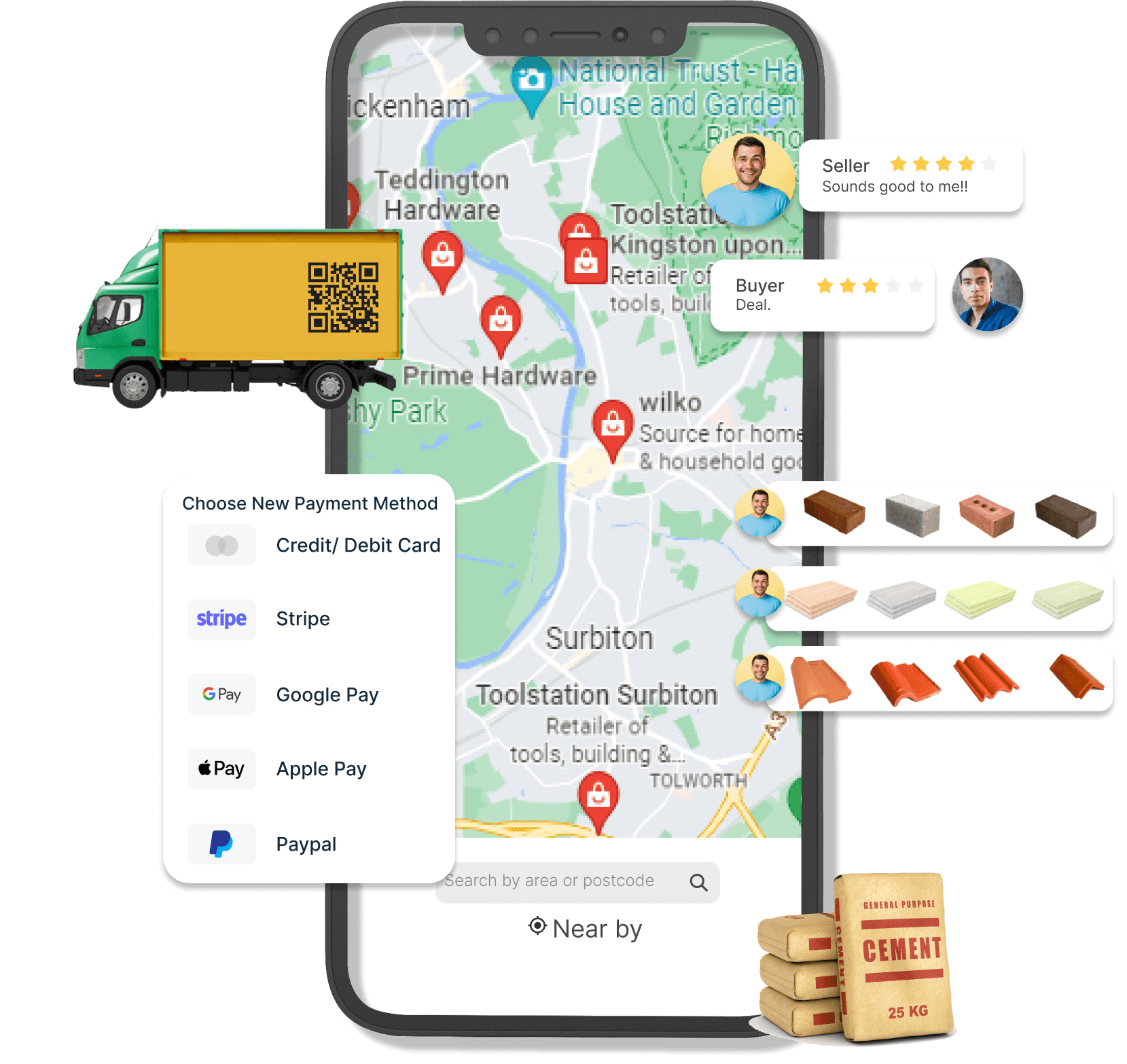
An online commerce platform enabling individuals and construction firms to remotely negotiate with building material providers throughout the United Kingdom tailored to their particular needs.
Position - UI/UX
Length - 8 Weeks
Methodology - Stanford D
Position - UI/UX
Length - 8 Weeks
Methodology - Stanford D
Position - UI/UX
Length - 8 Weeks
Methodology - Stanford D
0.1 Overview
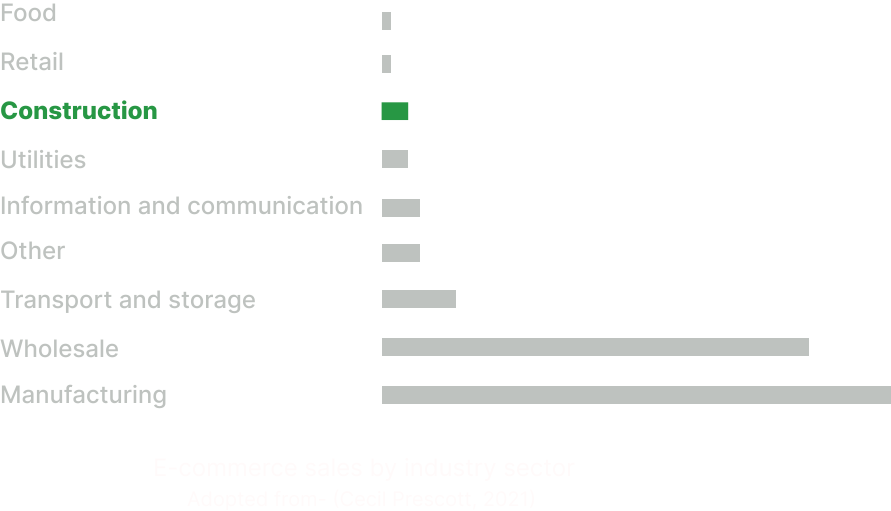
This study demonstrates the steps involved in conducting research to create a beneficial application that integrates the findings. It has been noticed that e-commerce is flourishing in the UK, but the construction industry is not performing as well as other business sectors. This was considered an opportunity to develop the marketplace for the construction industry.
0.1 Overview
This study demonstrates the steps involved in conducting research to create a beneficial application that integrates the findings. It has been noticed that e-commerce is flourishing in the UK, but the construction industry is not performing as well as other business sectors. This was considered an opportunity to develop the marketplace for the construction industry.
0.1 Overview
This study demonstrates the steps involved in conducting research to create a beneficial application that integrates the findings. It has been noticed that e-commerce is flourishing in the UK, but the construction industry is not performing as well as other business sectors. This was considered an opportunity to develop the marketplace for the construction industry.
0.2 Online Statistics
80% of suppliers are focused on E commerce.
75% of buyers research first.
60% of buyers are younger.
34% of contractors are changing their buying behaviour.
0.2 Online Statistics
80% of suppliers are focused on E commerce.
75% of buyers research first.
60% of buyers are younger.
34% of contractors are changing their buying behaviour.
0.2 Online Statistics
80% of suppliers are focused on E commerce.
75% of of buyers research first.
60% of buyers are younger.
34% of contractors are changing their buying behaviour.
0.3 Current Procurement Method Limitations
Physical
Specified geographic area
Paper-based catalogues (Requires space)
Limited amount of information
Digital
Maintain a list of online URLs
Manually incorporate information
Can not compare with other vendors
0.3 Current Procurement Method Limitations
Physical
Specified geographic area
Paper-based catalogues (Requires space)
Limited amount of information
Digital
Maintain a list of online URLs
Manually incorporate information
Can not compare with other vendors
0.3 Current Procurement Method Limitations
Physical
Specified geographic area
Paper-based catalogues (Requires space)
Limited amount of information
Digital
Maintain a list of online URLs
Manually incorporate information
Can not compare with other vendors
0.4 Problem Statement
For people residing in the United Kingdom, choosing construction resources from a vast inventory poses challenges, as does utilizing group discounts, interacting with suppliers, and scrutinizing products remotely.
0.4 Problem Statement
For people residing in the United Kingdom, choosing construction resources from a vast inventory poses challenges, as does utilizing group discounts, interacting with suppliers, and scrutinizing products remotely.
0.4 Problem Statement
For people residing in the United Kingdom, choosing construction resources from a vast inventory poses challenges, as does utilizing group discounts, interacting with suppliers, and scrutinizing products remotely.
0.5 My Approach
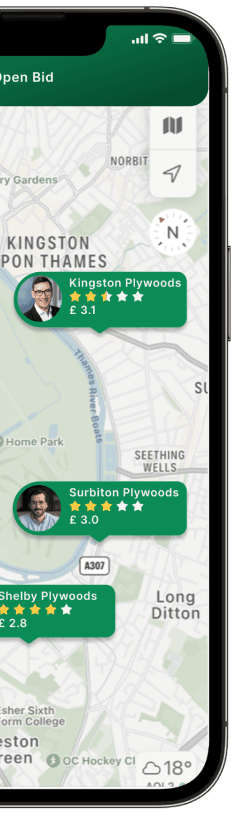
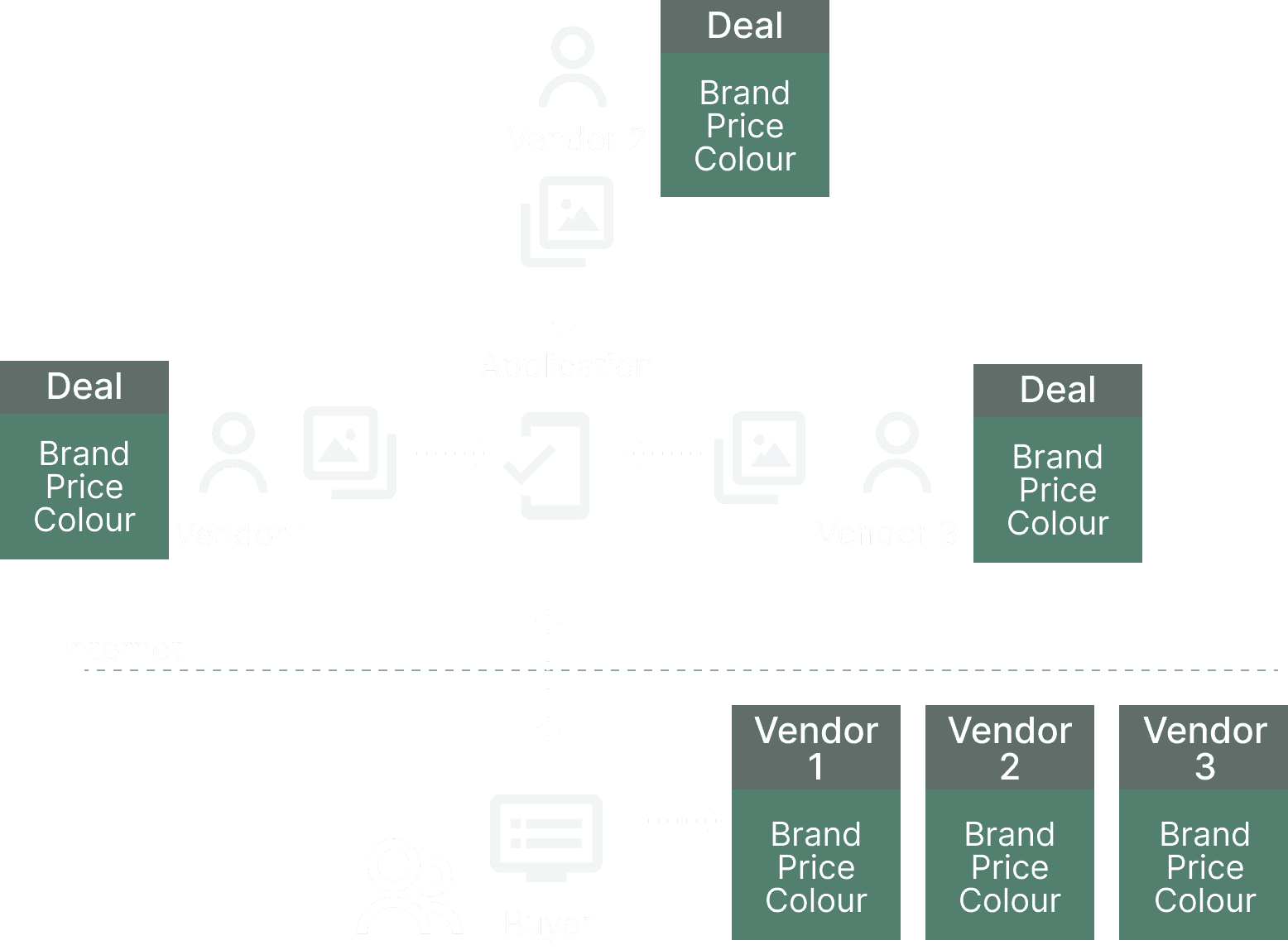
Approach for simplifying information interchange across E-commerce platforms for the acquisition of building materials. This approach will give customers and sellers additional value-added services by connecting e-commerce platforms
0.5 My Approach
Approach for simplifying information interchange across E-commerce platforms for the acquisition of building materials. This approach will give customers and sellers additional value-added services by connecting e-commerce platforms.
0.5 My Approach
Approach for simplifying information interchange across E-commerce platforms for the acquisition of building materials. This approach will give customers and sellers additional value-added services by connecting e-commerce platforms.
0.6 Design Process
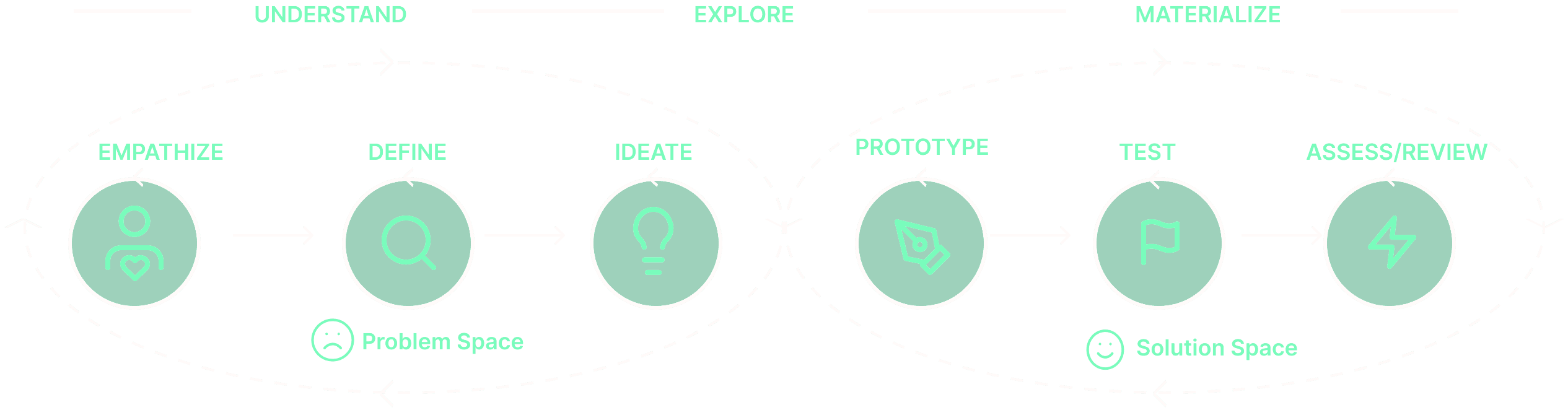
Stanford d design approach was considered for the project. After the usability test, Assess/Review stage is implemented in the process to determine the strengths and challenges of the application.
0.6 Design Process
Stanford d design approach was considered for the project. After the usability test, Assess/Review stage is implemented in the process to determine the strengths and challenges of the application.
0.6 Design Process
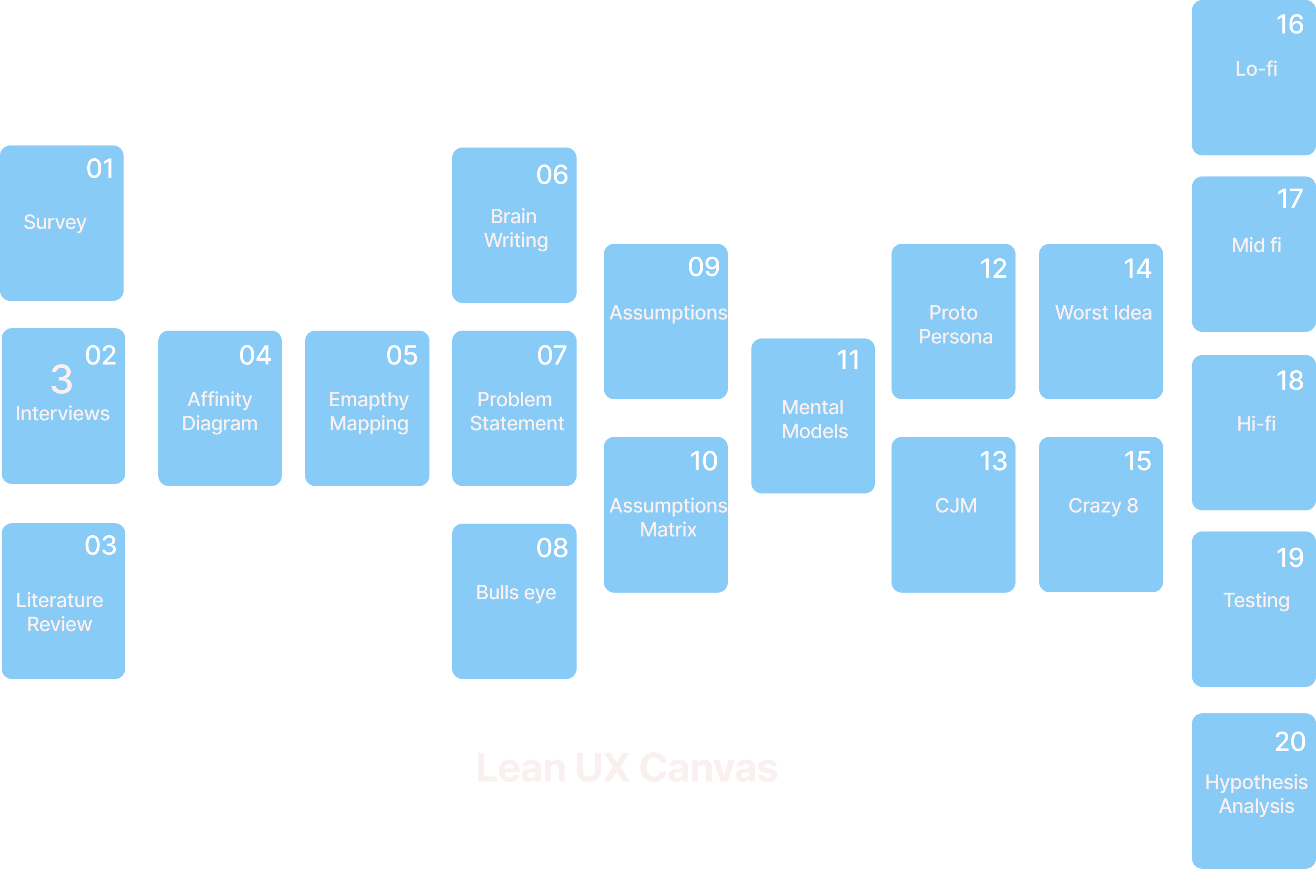
The three phases of the lean UX process considered are as follows:
1. Think
2. Make
3. Check
Empathize
0.7 Surveys
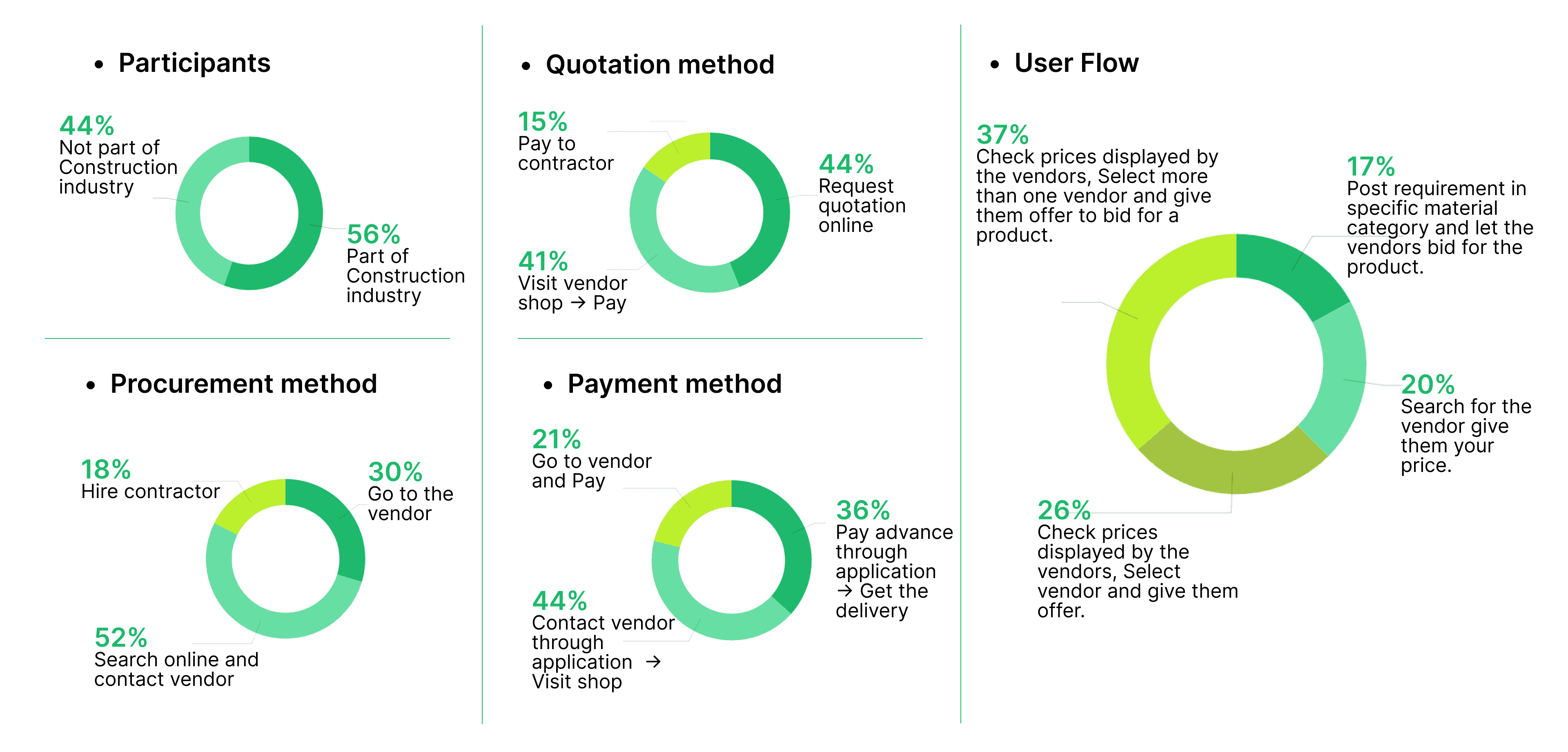
To avoid biased results, survey participants were not limited to those working in the construction industry. The survey's 15 questions were based on procurement, quotation, and payment methods.
Key Findings
Basic User flow for the proposed application.
The competitors, as well as the limitations and merits of the current e-commerce application, were identified.
Individuals prefer to browse for information and obtain quotes online, but they are hesitant to pay for building supplies online.
Empathize
0.7 Surveys
To avoid biased results, survey participants were not limited to those working in the construction industry. The survey's 15 questions were based on procurement, quotation, and payment methods.
Key Findings
Basic User flow for the proposed application.
The competitors, as well as the limitations and merits of the current e-commerce application, were identified.
Individuals prefer to browse for information and obtain quotes online, but they are hesitant to pay for building supplies online.
Empathize
0.7 Surveys
To avoid biased results, survey participants were not limited to those working in the construction industry. The survey's 15 questions were based on procurement, quotation, and payment methods.
Key Findings
Basic User flow for the proposed application.
The competitors, as well as the limitations and merits of the current e-commerce application, were identified.
Individuals prefer to browse for information and obtain quotes online, but they are hesitant to pay for building supplies online.
0.8 Interviews
All the participants were chosen based on a criterion that prioritized creating an e-commerce platform for the construction industry, by approaching them directly. The participant recruited for the interviews were from different business groups, but all fit within the umbrella of the construction sector and can provide perspective as a buyer and seller. The flow of the questions was as follows:
1. How the user uses the e-commerce application
2. The present e-commerce application's drawbacks and advantages.
3. Thoughts on establishing a negotiable market for the building industry.
4. Issues that may arise for the user when utilising the proposed application.
5. Wants and Doesn't want for the proposed application.
0.8 Interviews
All the participants were chosen based on a criterion that prioritized creating an e-commerce platform for the construction industry, by approaching them directly. The participant recruited for the interviews were from different business groups, but all fit within the umbrella of the construction sector and can provide perspective as a buyer and seller. The flow of the questions was as follows:
1. How the user uses the e-commerce application
2. The present e-commerce application's drawbacks and advantages.
3. Thoughts on establishing a negotiable market for the building industry.
4. Issues that may arise for the user when utilising the proposed application.
5. Wants and Doesn't want for the proposed application.
0.8 Interviews
All the participants were chosen based on a criterion that prioritized creating an e-commerce platform for the construction industry, by approaching them directly. The participant recruited for the interviews were from different business groups, but all fit within the umbrella of the construction sector and can provide perspective as a buyer and seller. The flow of the questions was as follows:
1. How the user uses the e-commerce application
2. The present e-commerce application's drawbacks and advantages.
3. Thoughts on establishing a negotiable market for the building industry.
4. Issues that may arise for the user when utilising the proposed application.
5. Wants and Doesn't want for the proposed application.
Key Findings
⦁ 4/6 participants desire an app that allows them to look up building supplies and find out where they can be found.
⦁ 5/6 participants are hesitant to pay the seller money before viewing the item in person.
⦁ 3/6 participants don't want to waste any more time negotiating.
⦁ 4/6 participants desire aspects like finance in the proposed app.
⦁ 5/6 participants think of bidding as an interesting and beneficial service for the application.
Key Findings
⦁ 4/6 participants desire an app that allows them to look up building supplies and find out where they can be found.
⦁ 5/6 participants are hesitant to pay the seller money before viewing the item in person.
⦁ 3/6 participants don't want to waste any more time negotiating.
⦁ 4/6 participants desire aspects like finance in the proposed app.
⦁ 5/6 participants think of bidding as an interesting and beneficial service for the application.
Key Findings
⦁ 4/6 participants desire an app that allows them to look up building supplies and find out where they can be found.
⦁ 5/6 participants are hesitant to pay the seller money before viewing the item in person.
⦁ 3/6 participants don't want to waste any more time negotiating.
⦁ 4/6 participants desire aspects like finance in the proposed app.
⦁ 5/6 participants think of bidding as an interesting and beneficial service for the application.
0.9 Affinity Diagram
As a result of the interviews, diverse viewpoints were developed based on their business perspectives. The affinity map and themes were used to organise and condense information about an application, a user procedure, and complex issues.
0.9 Affinity Diagram
As a result of the interviews, diverse viewpoints were developed based on their business perspectives. The affinity map and themes were used to organise and condense information about an application, a user procedure, and complex issues.
0.9 Affinity Diagram
As a result of the interviews, diverse viewpoints were developed based on their business perspectives. The affinity map and themes were used to organise and condense information about an application, a user procedure, and complex issues.

Define
10. Empathy Mapping
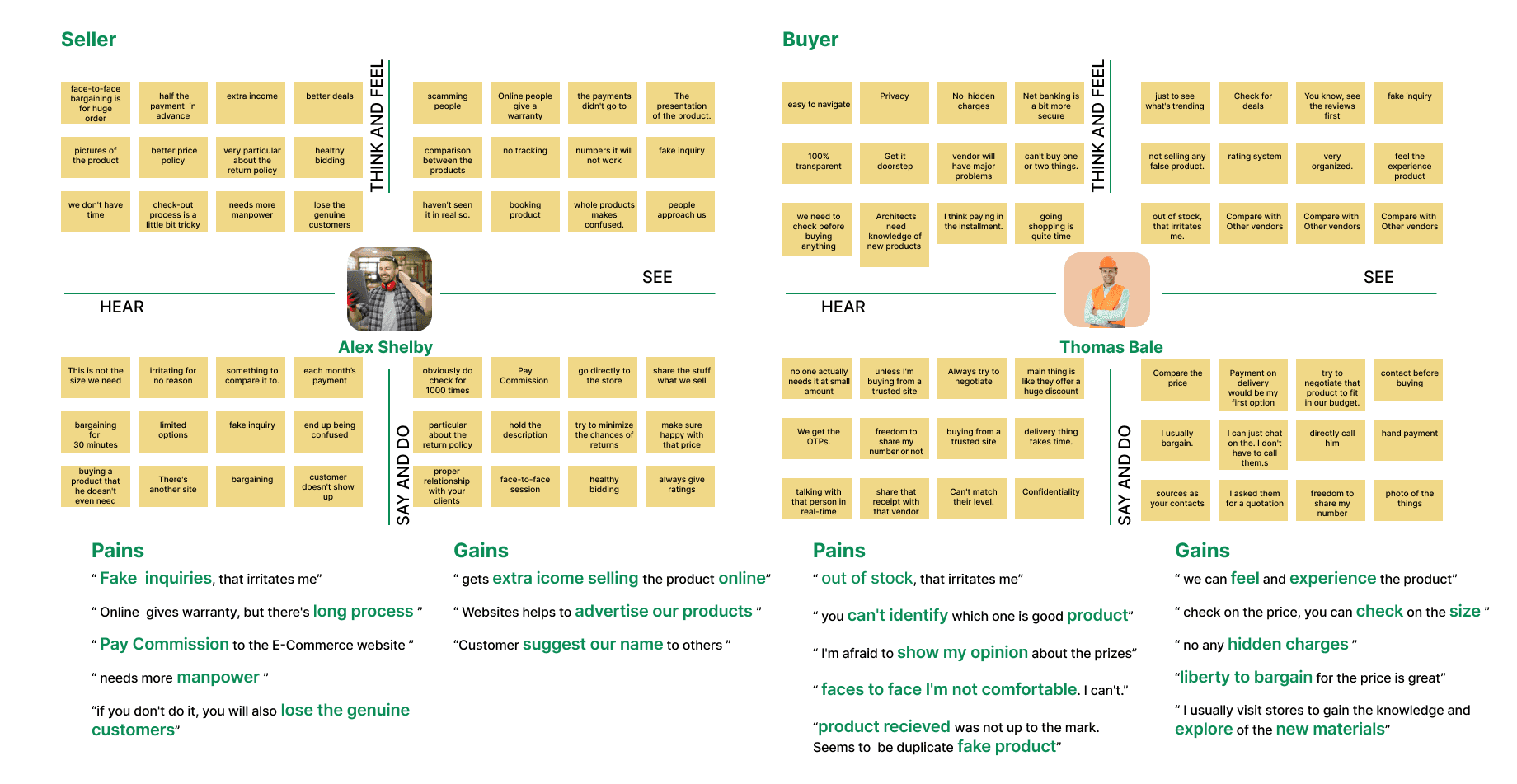
The mapping approach assisted in synthesising interview findings concerning a user's requirements. Mapping created a bridge between personas and concept deliverables. One user persona was identified as a buyer, and the other was characterised as a seller.
Define
10. Empathy Mapping
The mapping approach assisted in synthesising interview findings concerning a user's requirements. Mapping created a bridge between personas and concept deliverables. One user persona was identified as a buyer, and the other was characterised as a seller.
Define
10. Empathy Mapping
The mapping approach assisted in synthesising interview findings concerning a user's requirements. Mapping created a bridge between personas and concept deliverables. One user persona was identified as a buyer, and the other was characterised as a seller.
11. Persona
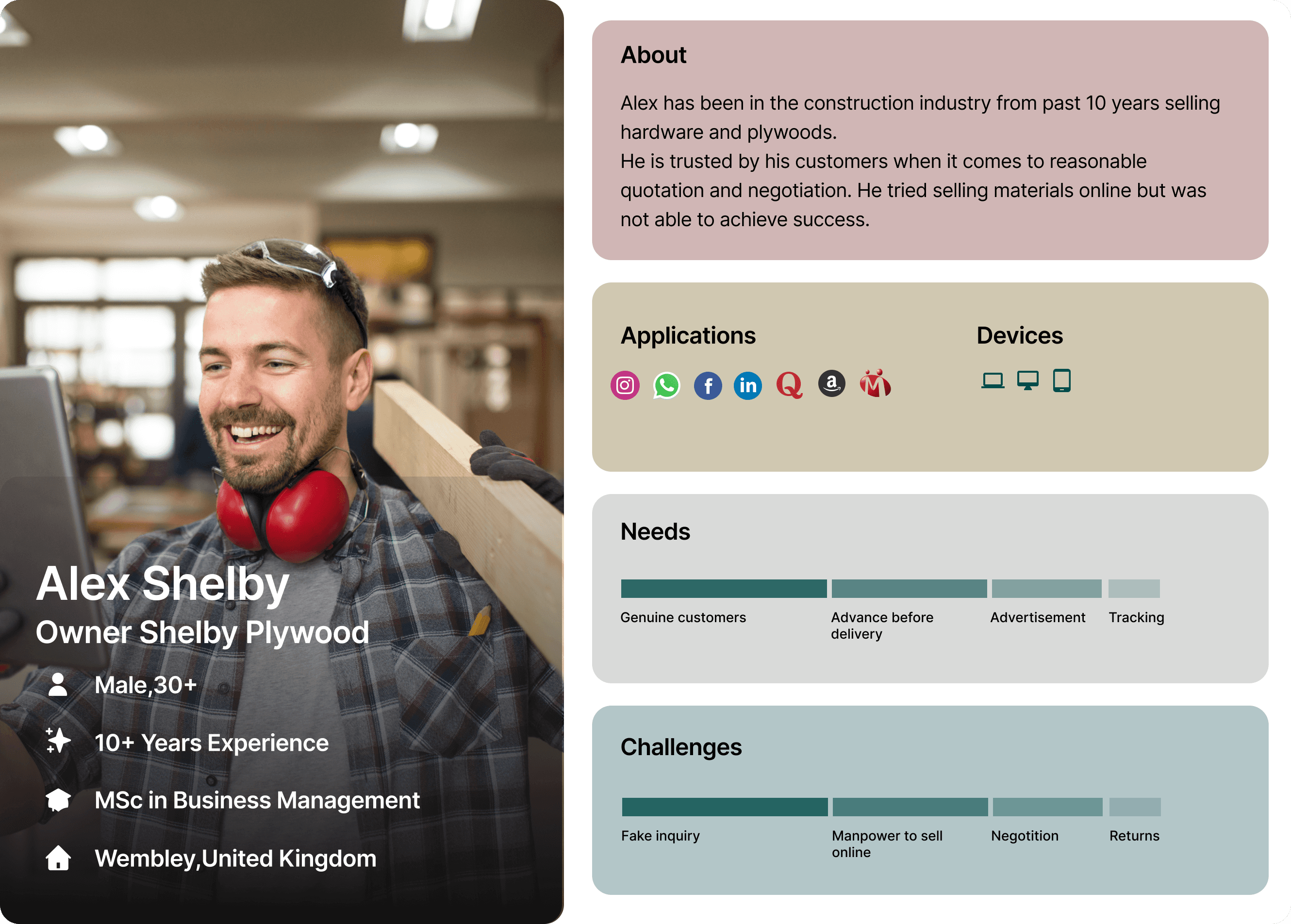
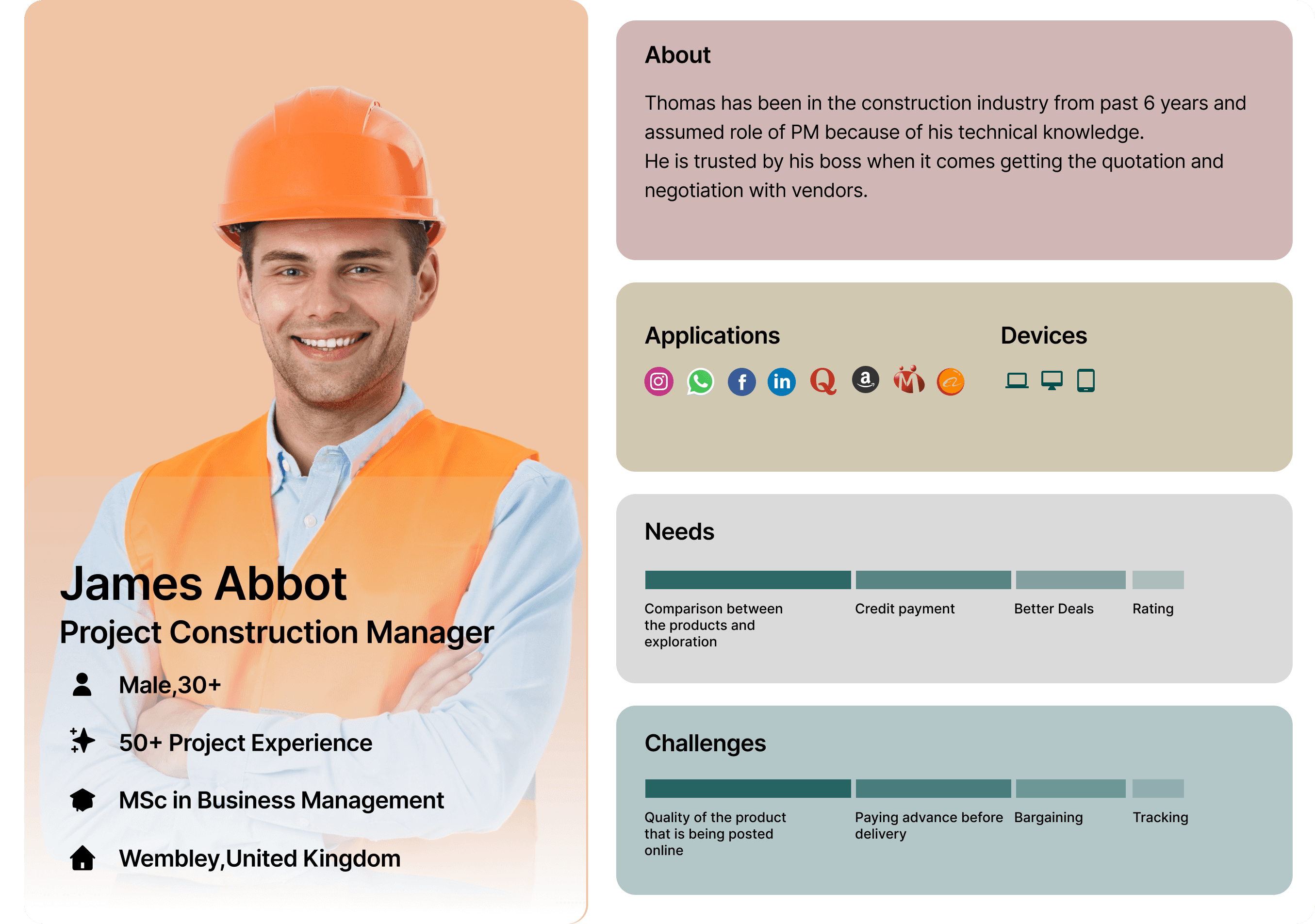
Based on the Empathy Mapping personas were created.
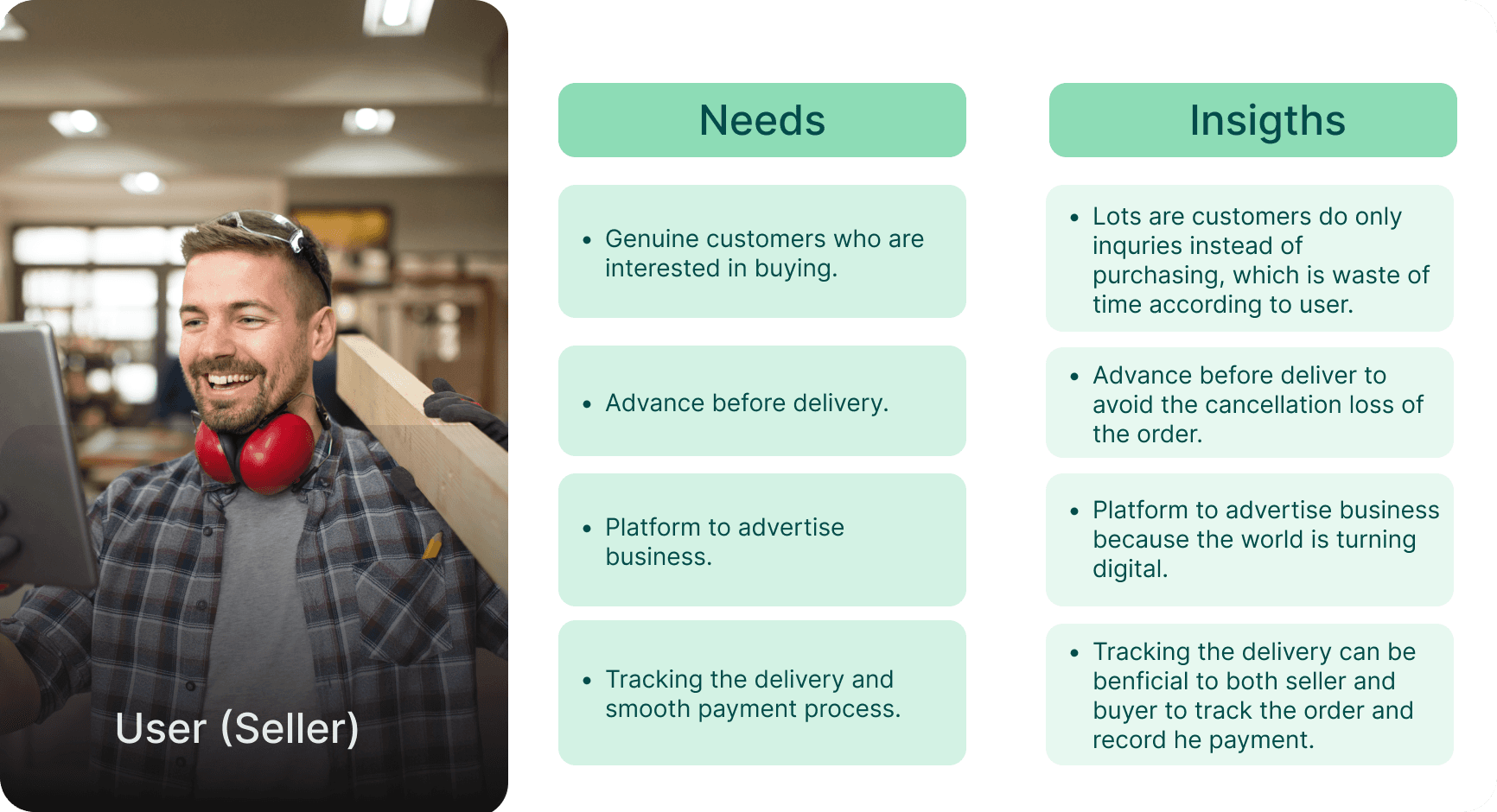
Persona 1 (Seller) - The persona described below is that of a vendor that wants to utilise e-commerce to grow business via advertising, but who lacks the manpower to cope with the lengthy online procedure and finds tracking and managing returns to be difficult.
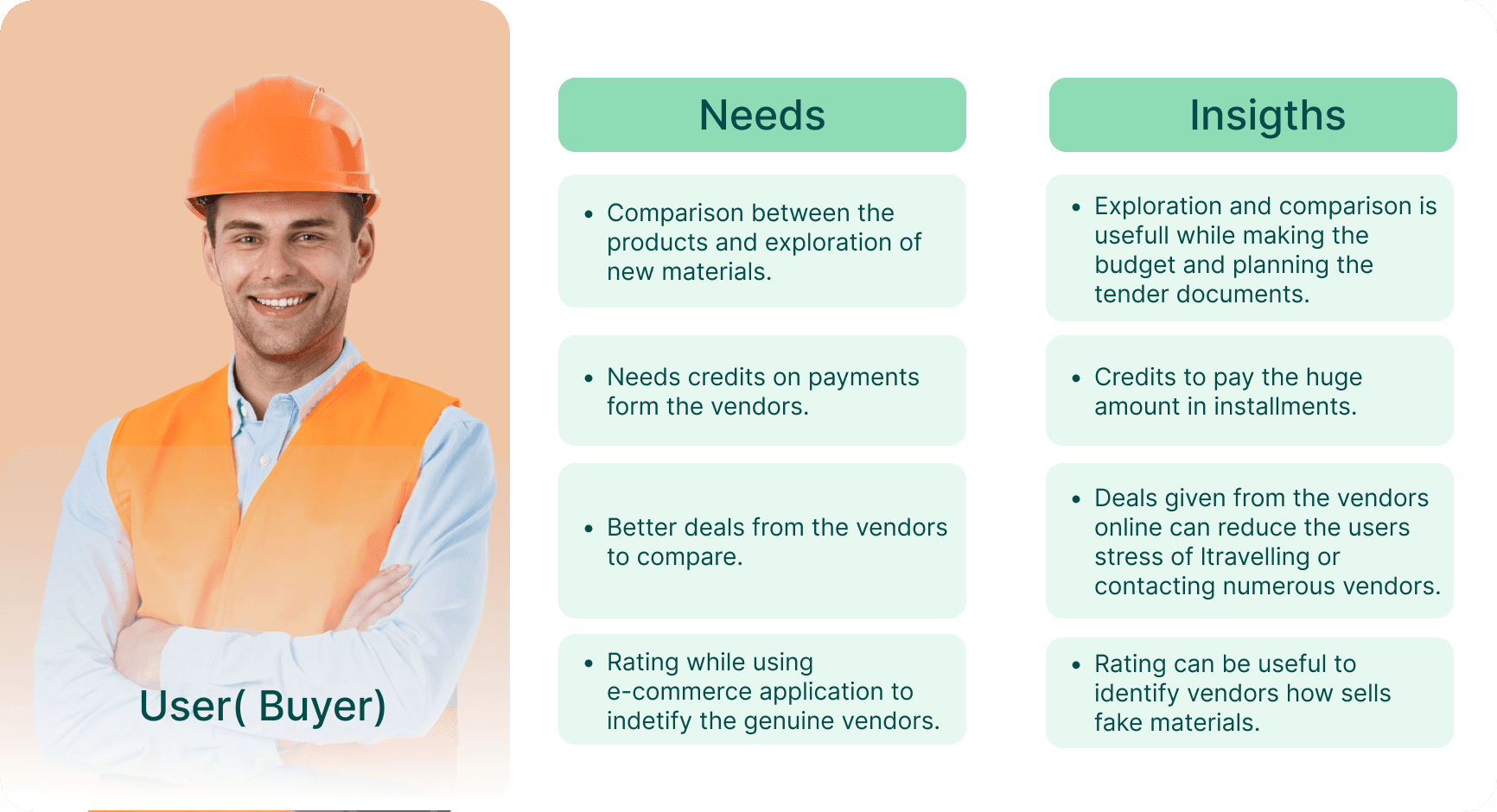
Persona 2 (Buyer) - The persona described below is that of a construction manager who wants to evaluate product costs and negotiate arrangements with a verified seller using credit payment. He is not a good negotiator and becomes irritated when he receives a false or defective product after paying a deposit.
11. Persona
Based on the Empathy Mapping personas were created.
Persona 1 (Seller) - The persona described below is that of a vendor that wants to utilise e-commerce to grow business via advertising, but who lacks the manpower to cope with the lengthy online procedure and finds tracking and managing returns to be difficult.
Persona 2 (Buyer) - The persona described below is that of a construction manager who wants to evaluate product costs and negotiate arrangements with a verified seller using credit payment. He is not a good negotiator and becomes irritated when he receives a false or defective product after paying a deposit.
11. Persona
Based on the Empathy Mapping personas were created.
Persona 1 (Seller) - The persona described below is that of a vendor that wants to utilise e-commerce to grow business via advertising, but who lacks the manpower to cope with the lengthy online procedure and finds tracking and managing returns to be difficult.
Persona 2 (Buyer) - The persona described below is that of a construction manager who wants to evaluate product costs and negotiate arrangements with a verified seller using credit payment. He is not a good negotiator and becomes irritated when he receives a false or defective product after paying a deposit.
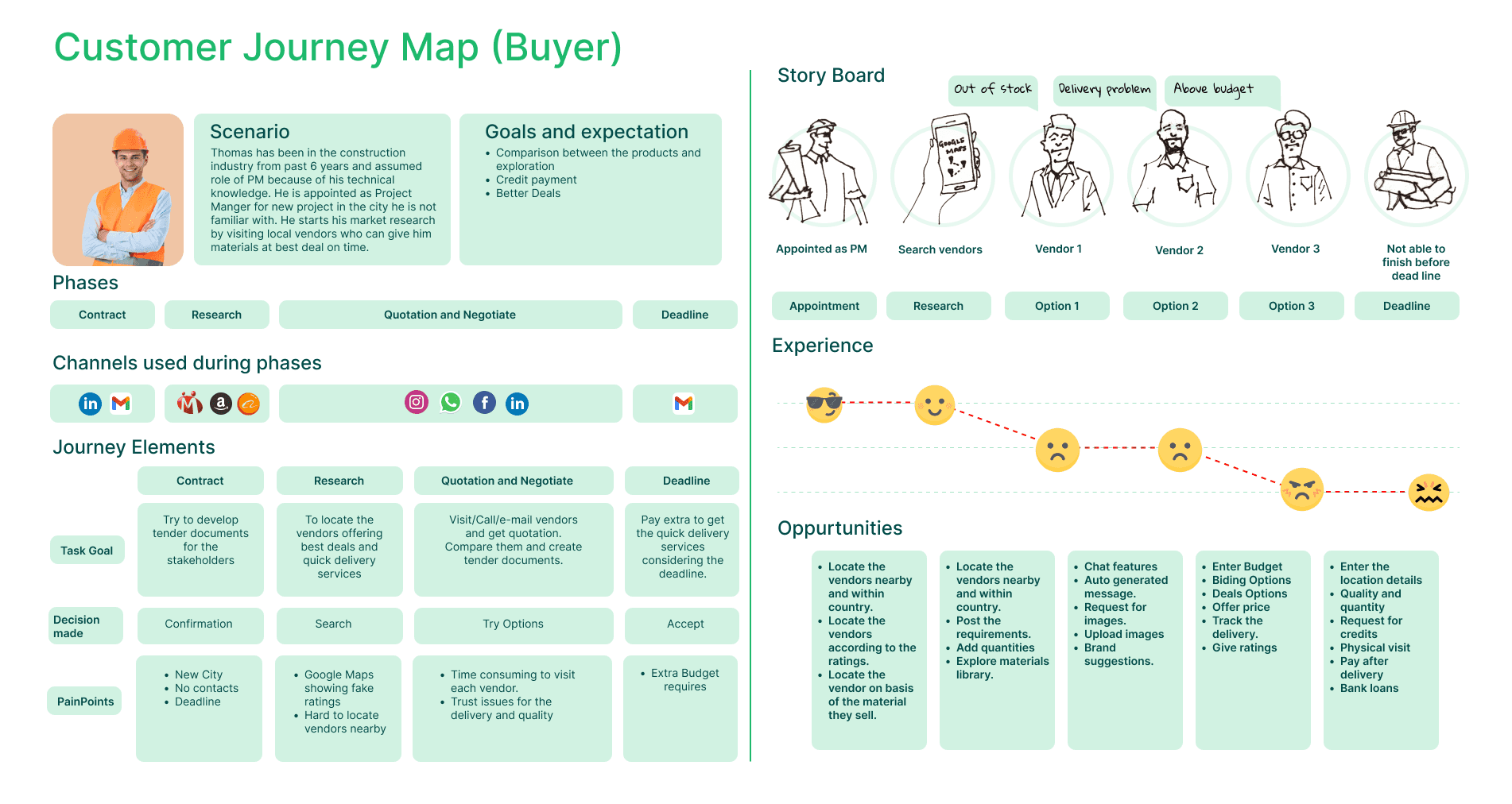
12.0Customer Journey Map
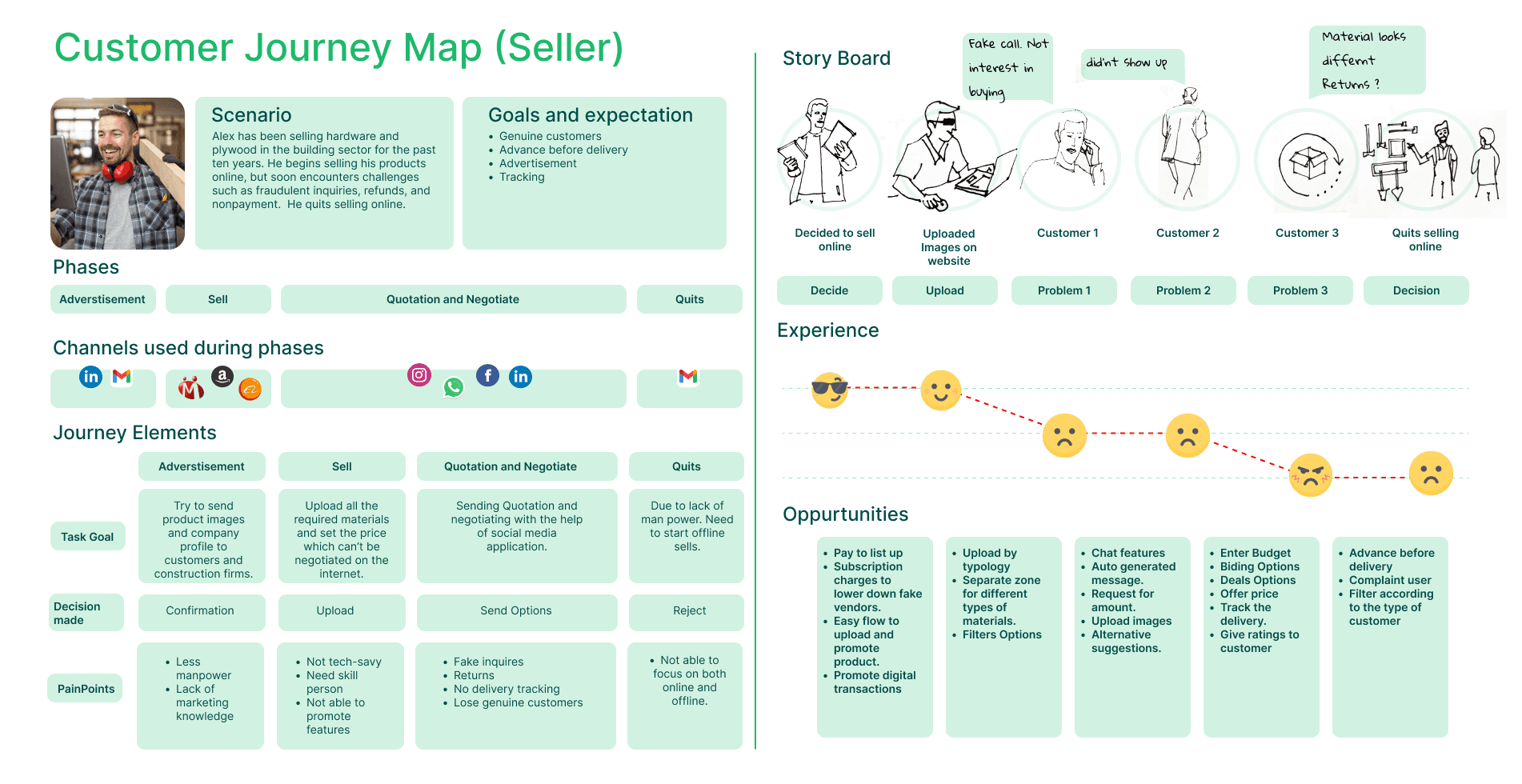
Customer journey maps are used to depict the challenges that a customer may encounter while purchasing a product, as well as the obstacles that a vendor may have while attempting to sell his products online.
Key Findings-
Possible opportunities created-
⦁ Locate the vendors according to the ratings.
⦁ Explore the materials library.
⦁ Enter Budget
⦁ Services Provided and Biding Options
⦁ Request for credits
⦁ Subscription charges to lower down fake vendors.
⦁ Easy flow to upload and promote a product.
⦁ Auto-generated message to lower time consumption.
⦁ Filter according to the type of customer to identify genuine customers.
12.0Customer Journey Map
Customer journey maps are used to depict the challenges that a customer may encounter while purchasing a product, as well as the obstacles that a vendor may have while attempting to sell his products online.
Key Findings-
Possible opportunities created-
⦁ Locate the vendors according to the ratings.
⦁ Explore the materials library.
⦁ Enter Budget
⦁ Services Provided and Biding Options
⦁ Request for credits
⦁ Subscription charges to lower down fake vendors.
⦁ Easy flow to upload and promote a product.
⦁ Auto-generated message to lower time consumption.
⦁ Filter according to the type of customer to identify genuine customers.
12.0Customer Journey Map
Customer journey maps are used to depict the challenges that a customer may encounter while purchasing a product, as well as the obstacles that a vendor may have while attempting to sell his products online.
Key Findings-
Possible opportunities created-
⦁ Locate the vendors according to the ratings.
⦁ Explore the materials library.
⦁ Enter Budget
⦁ Services Provided and Biding Options
⦁ Request for credits
⦁ Subscription charges to lower down fake vendors.
⦁ Easy flow to upload and promote a product.
⦁ Auto-generated message to lower time consumption.
⦁ Filter according to the type of customer to identify genuine customers.
13.0POV
The Point of View statement was used to focus on specific users, insights and needs that were uncovered at empathize stage. The buyer's POV statement focuses on getting a deal and comparing products, whereas the seller's POV statement focuses on minimising the time spent selling and advertising.
13.0POV
The Point of View statement was used to focus on specific users, insights and needs that were uncovered at empathize stage. The buyer's POV statement focuses on getting a deal and comparing products, whereas the seller's POV statement focuses on minimising the time spent selling and advertising.
13.0POV
The Point of View statement was used to focus on specific users, insights and needs that were uncovered at empathize stage. The buyer's POV statement focuses on getting a deal and comparing products, whereas the seller's POV statement focuses on minimising the time spent selling and advertising.
14.0Ideation
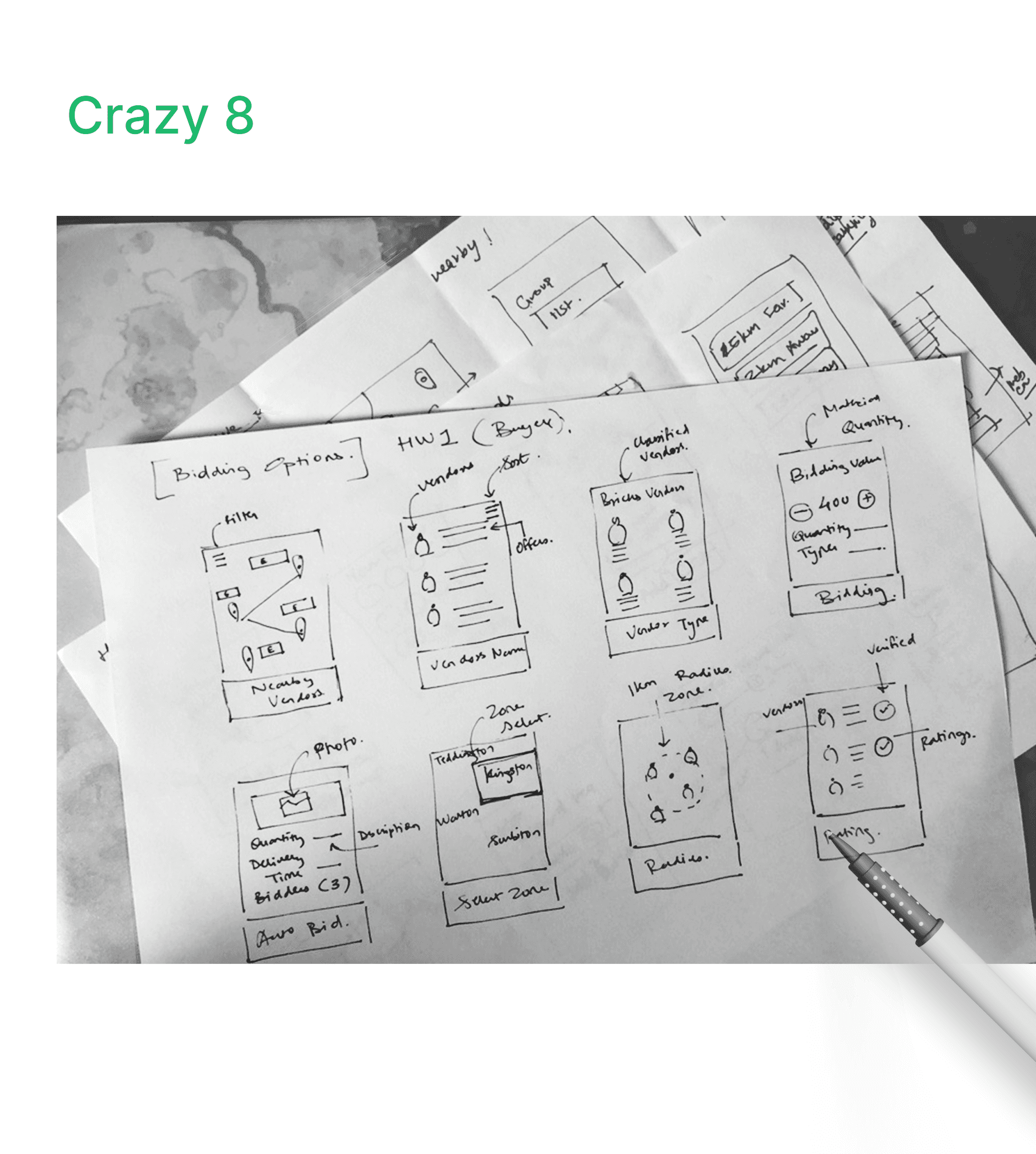
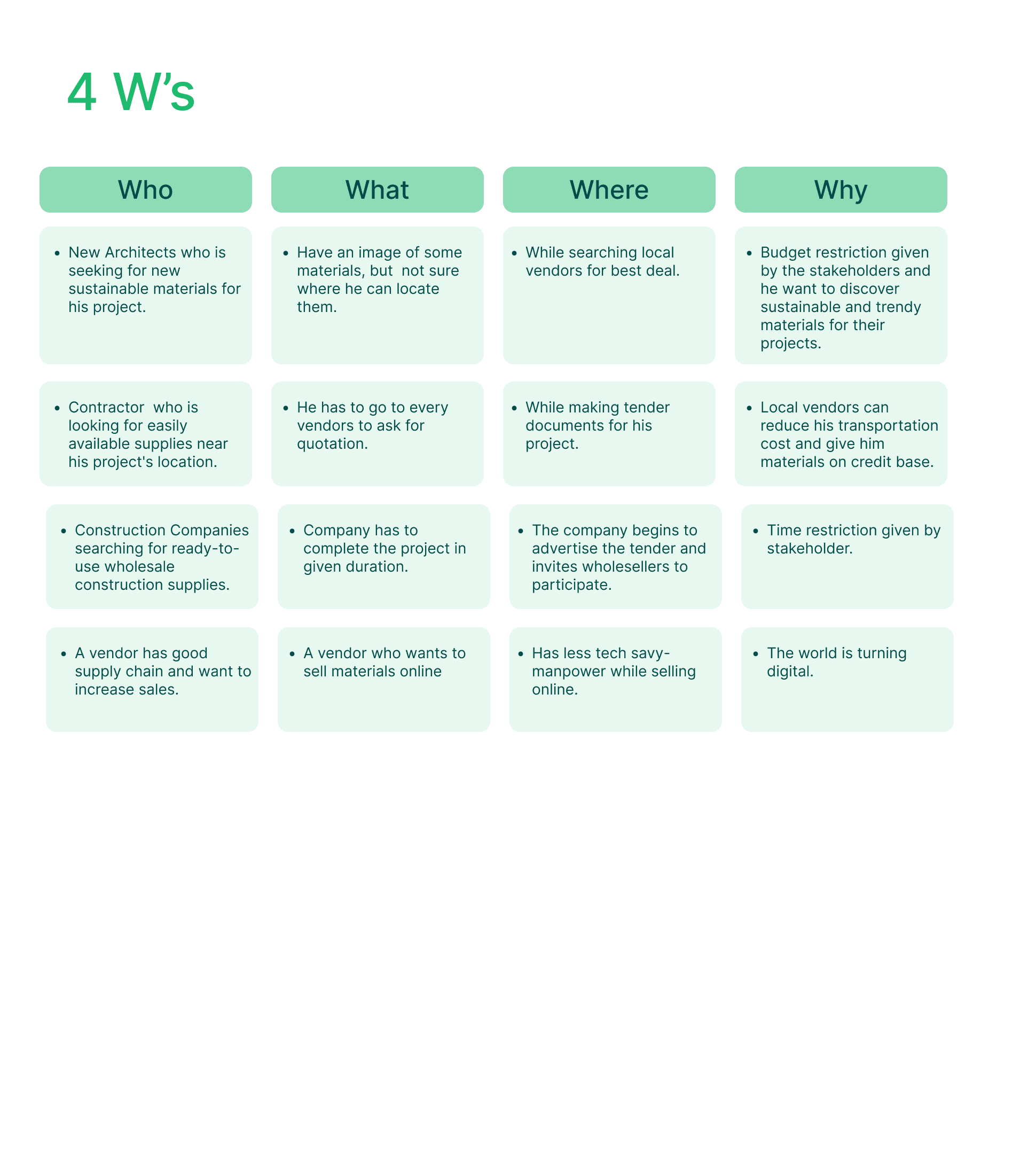
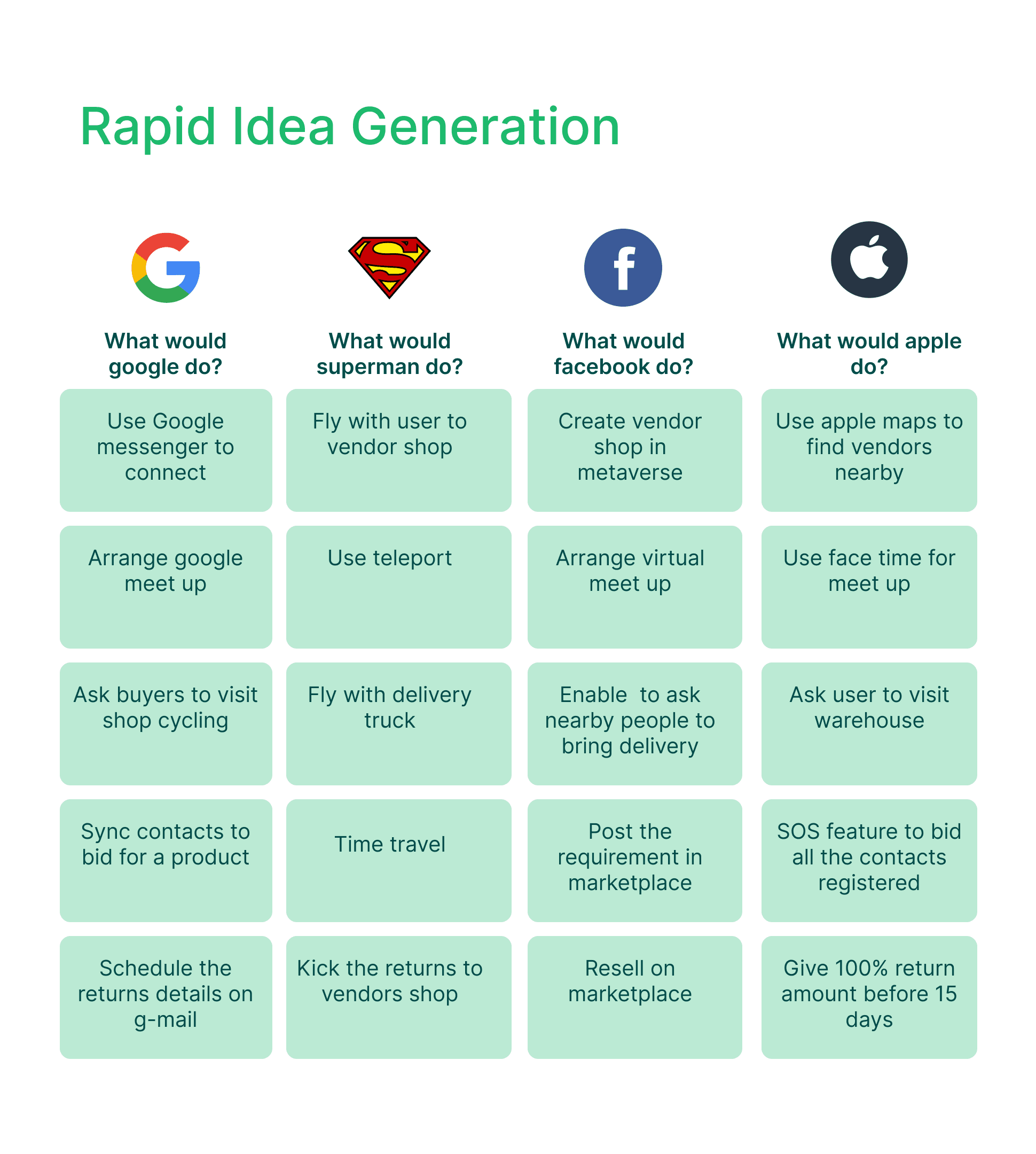
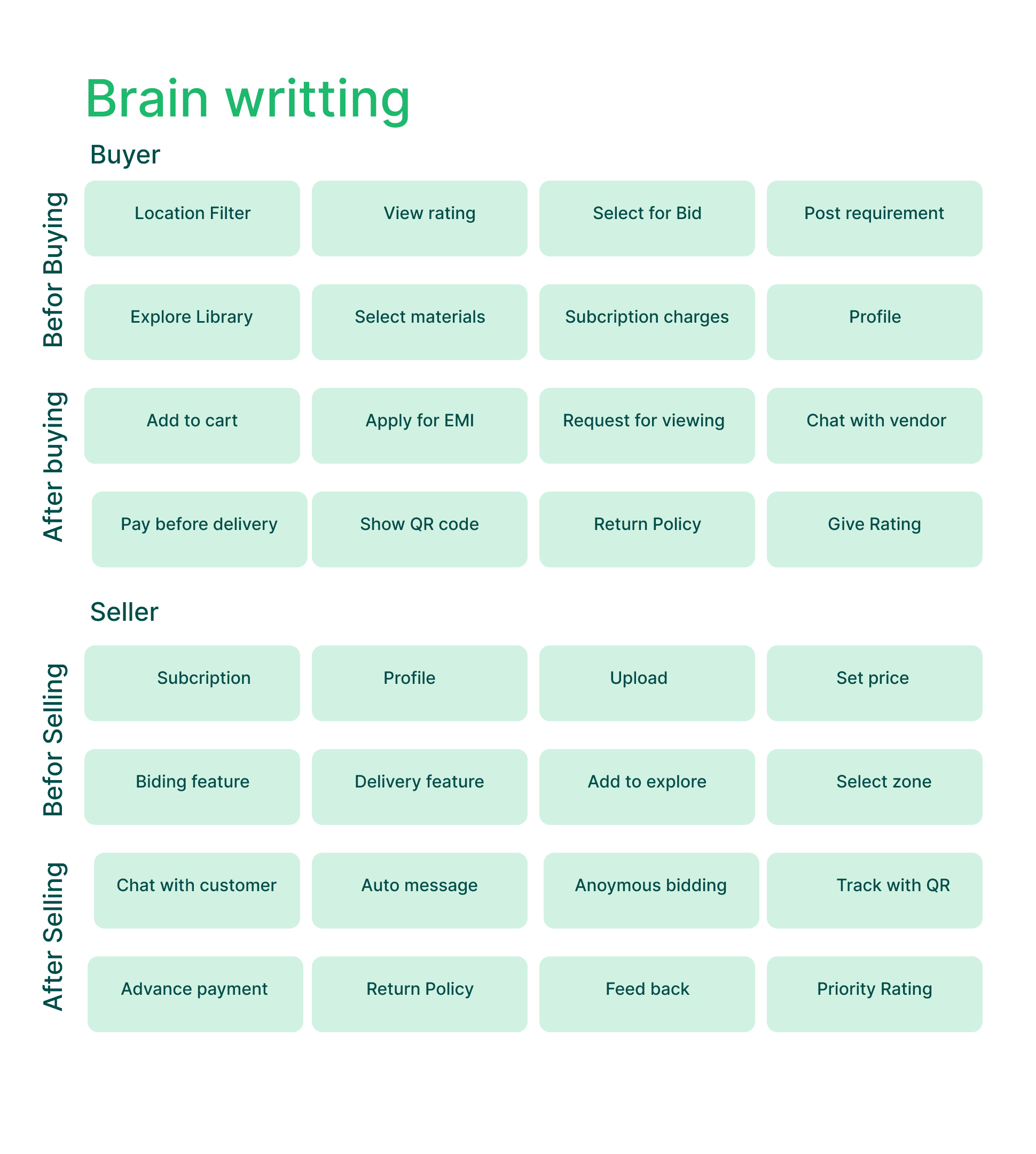
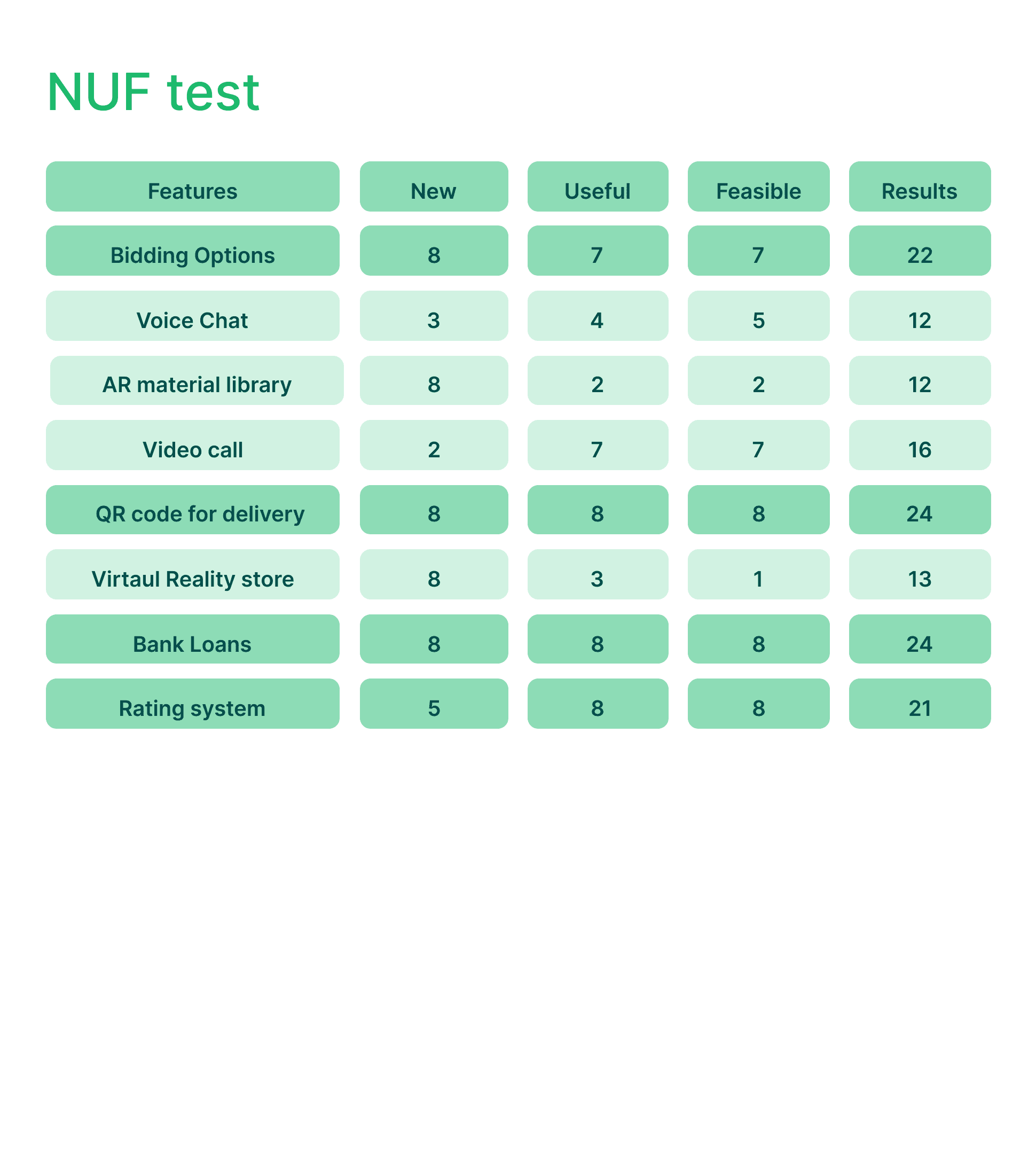
Throughout this stage, remedies to the problems and requirements were created. The below mentioned techniques were carried out in Ideation phase.
How Might We
Rapid Idea Generation
4W's
Brain Writing
Crazy 8
NUF test
14.0Ideation
Throughout this stage, remedies to the problems and requirements were created. The below mentioned techniques were carried out in Ideation phase.
How Might We
Rapid Idea Generation
4W's
Brain Writing
Crazy 8
NUF test
14.0Ideation
Throughout this stage, remedies to the problems and requirements were created. The below mentioned techniques were carried out in Ideation phase.
How Might We
Rapid Idea Generation
4W's
Brain Writing
Crazy 8
NUF test
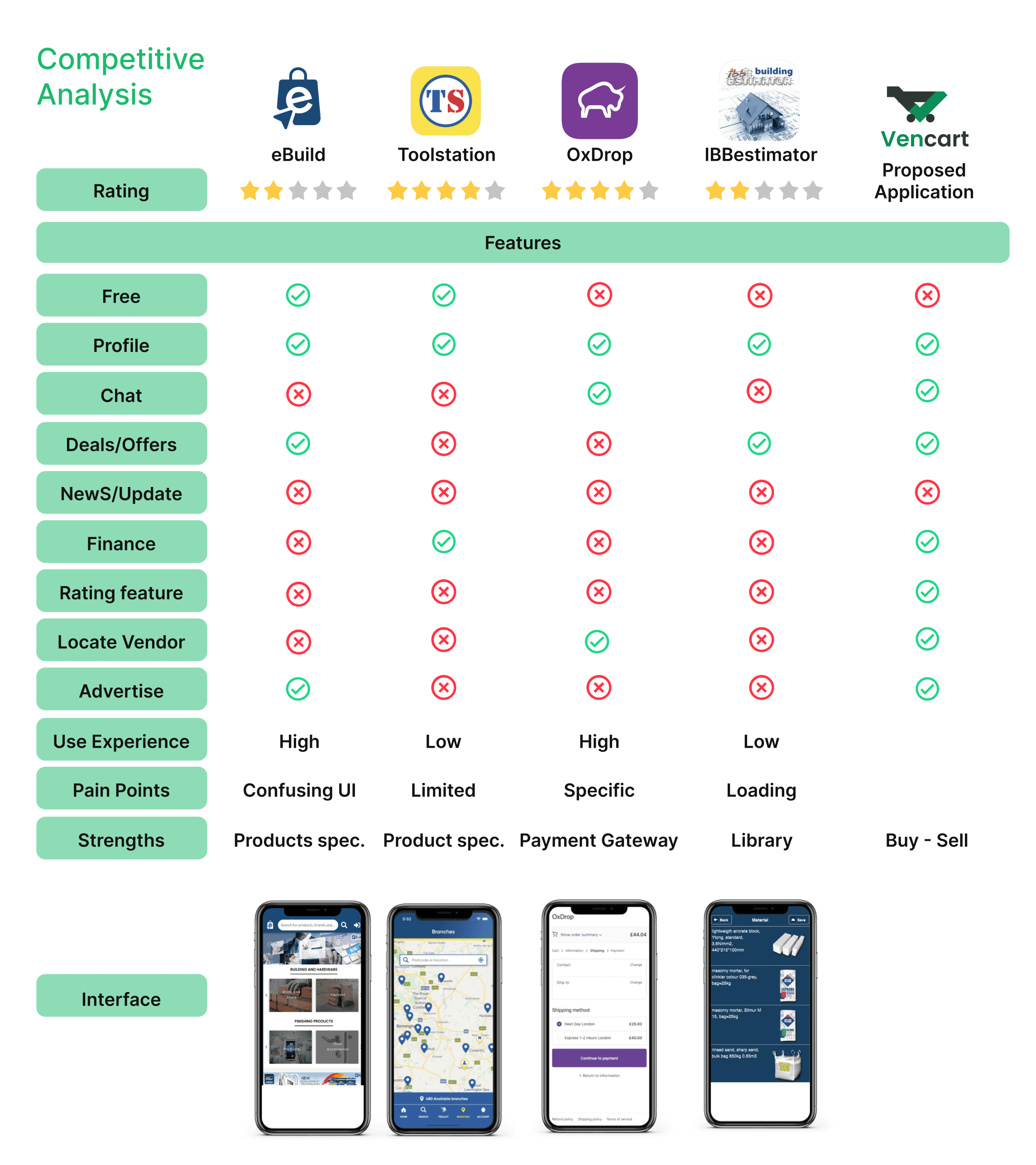
15.0Competitive Analysis
The competitive analysis was carried out to gain a better grasp of the existing market and to spot new opportunities.
Key Findings
⦁ Business Model - B2B business model. All competitors' applications consisted of a company that offers its own or white labelled products.
⦁ Problems - Customer engagement, User Flow, Vendor details.
⦁ Opportunity - To develop an application that should be focused on "by people for people". To develop an application which can create a marketplace for the whole seller.
⦁ Strengths of the application studied – Material library, Search and Navigation features.
Some unique features which can be incorporated –
⦁ Search materials by dimensions – IBBestimator.
⦁ Filter Orders – e build.
⦁ Chatbots - Oxdrop
15.0Competitive Analysis
The competitive analysis was carried out to gain a better grasp of the existing market and to spot new opportunities.
Key Findings
⦁ Business Model - B2B business model. All competitors' applications consisted of a company that offers its own or white labelled products.
⦁ Problems - Customer engagement, User Flow, Vendor details.
⦁ Opportunity - To develop an application that should be focused on "by people for people". To develop an application which can create a marketplace for the whole seller.
⦁ Strengths of the application studied – Material library, Search and Navigation features.
Some unique features which can be incorporated –
⦁ Search materials by dimensions – IBBestimator.
⦁ Filter Orders – e build.
⦁ Chatbots - Oxdrop
15.0Competitive Analysis
The competitive analysis was carried out to gain a better grasp of the existing market and to spot new opportunities.
Key Findings
⦁ Business Model - B2B business model. All competitors' applications consisted of a company that offers its own or white labelled products.
⦁ Problems - Customer engagement, User Flow, Vendor details.
⦁ Opportunity - To develop an application that should be focused on "by people for people". To develop an application which can create a marketplace for the whole seller.
⦁ Strengths of the application studied – Material library, Search and Navigation features.
Some unique features which can be incorporated –
⦁ Search materials by dimensions – IBBestimator.
⦁ Filter Orders – e build.
⦁ Chatbots - Oxdrop
16.0Business Plan
During the process, the following stakeholders were identified:
⦁ Primary Stakeholders- Vendors
⦁ Secondary stakeholders - Buyers
⦁ Tertiary stakeholders - Financial Banks
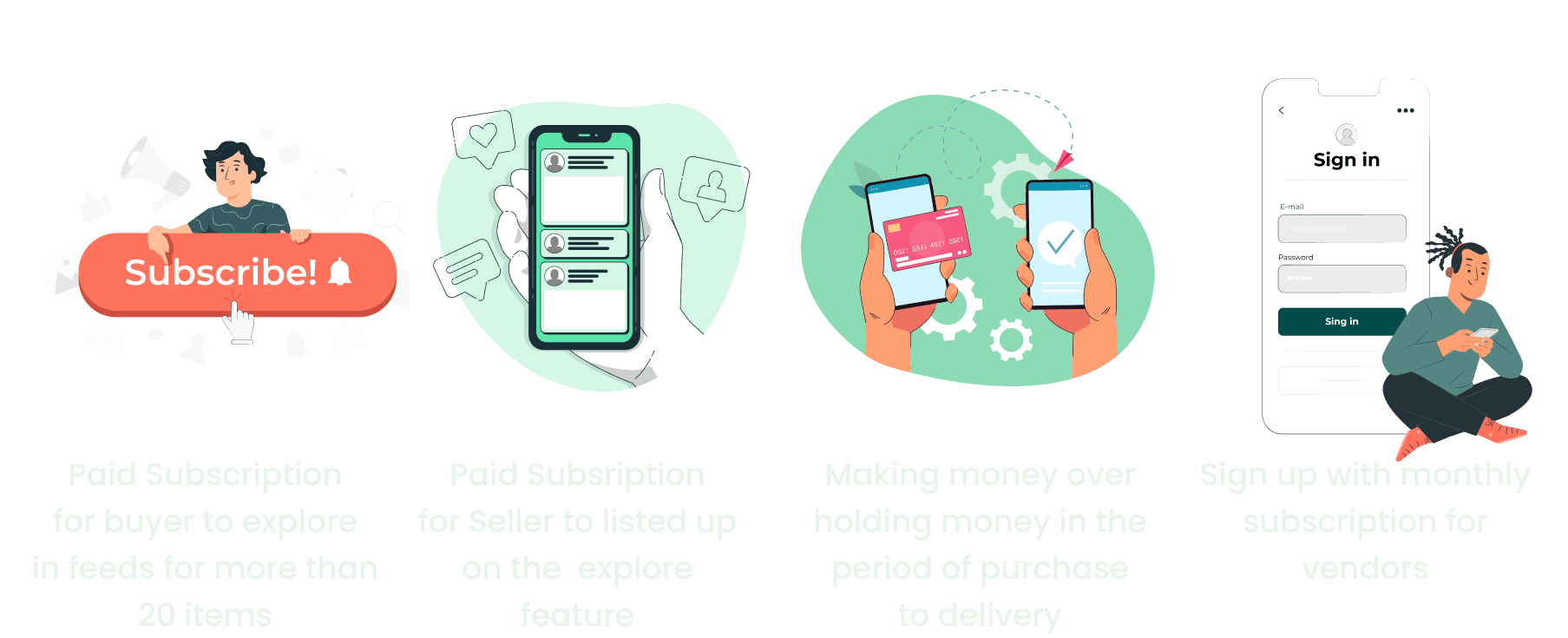
When consumers pay an advance amount to the vendor, the money is held by the application until the buyer receives delivery and confirms the quality of the material is satisfactory by scanning the QR code given by the vendor. The holding amount can be a source of revenue for Vencart. The below image shows opportunities for business.
16.0Business Plan
During the process, the following stakeholders were identified:
⦁ Primary Stakeholders- Vendors
⦁ Secondary stakeholders - Buyers
⦁ Tertiary stakeholders - Financial Banks
When consumers pay an advance amount to the vendor, the money is held by the application until the buyer receives delivery and confirms the quality of the material is satisfactory by scanning the QR code given by the vendor. The holding amount can be a source of revenue for Vencart. The below image shows opportunities for business.
16.0Business Plan
During the process, the following stakeholders were identified:
⦁ Primary Stakeholders- Vendors
⦁ Secondary stakeholders - Buyers
⦁ Tertiary stakeholders - Financial Banks
When consumers pay an advance amount to the vendor, the money is held by the application until the buyer receives delivery and confirms the quality of the material is satisfactory by scanning the QR code given by the vendor. The holding amount can be a source of revenue for Vencart. The below image shows opportunities for business.
17.0Prototype
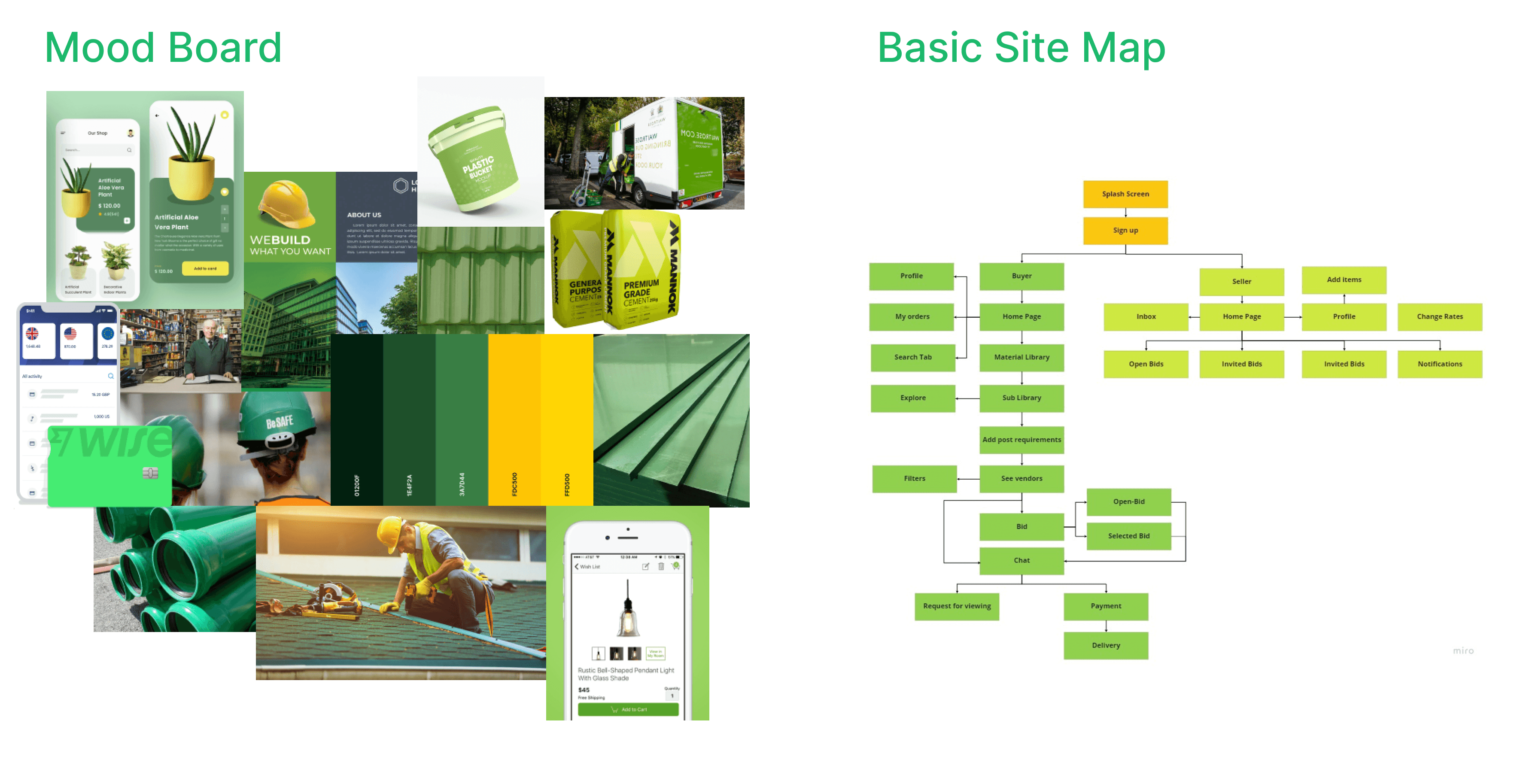
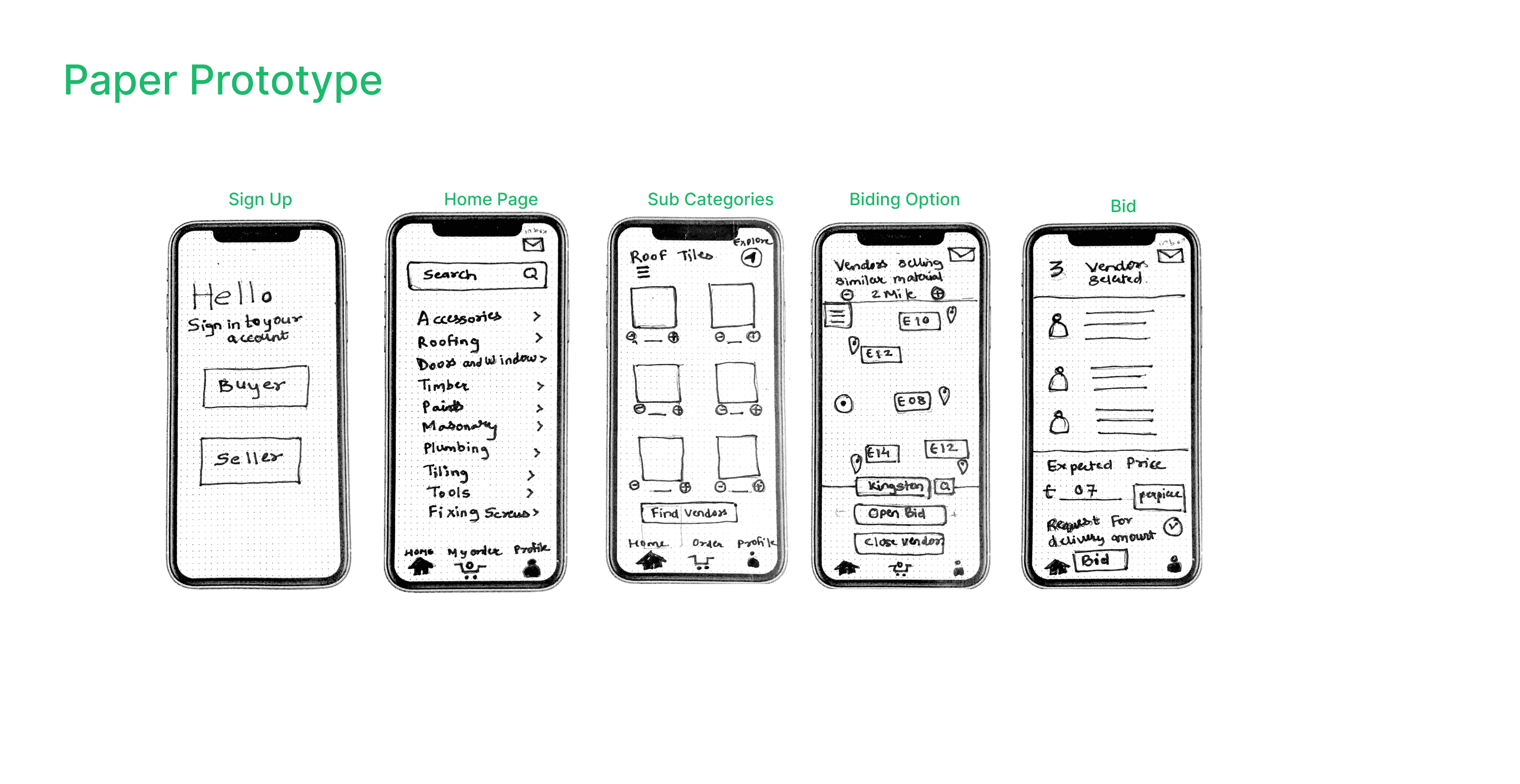
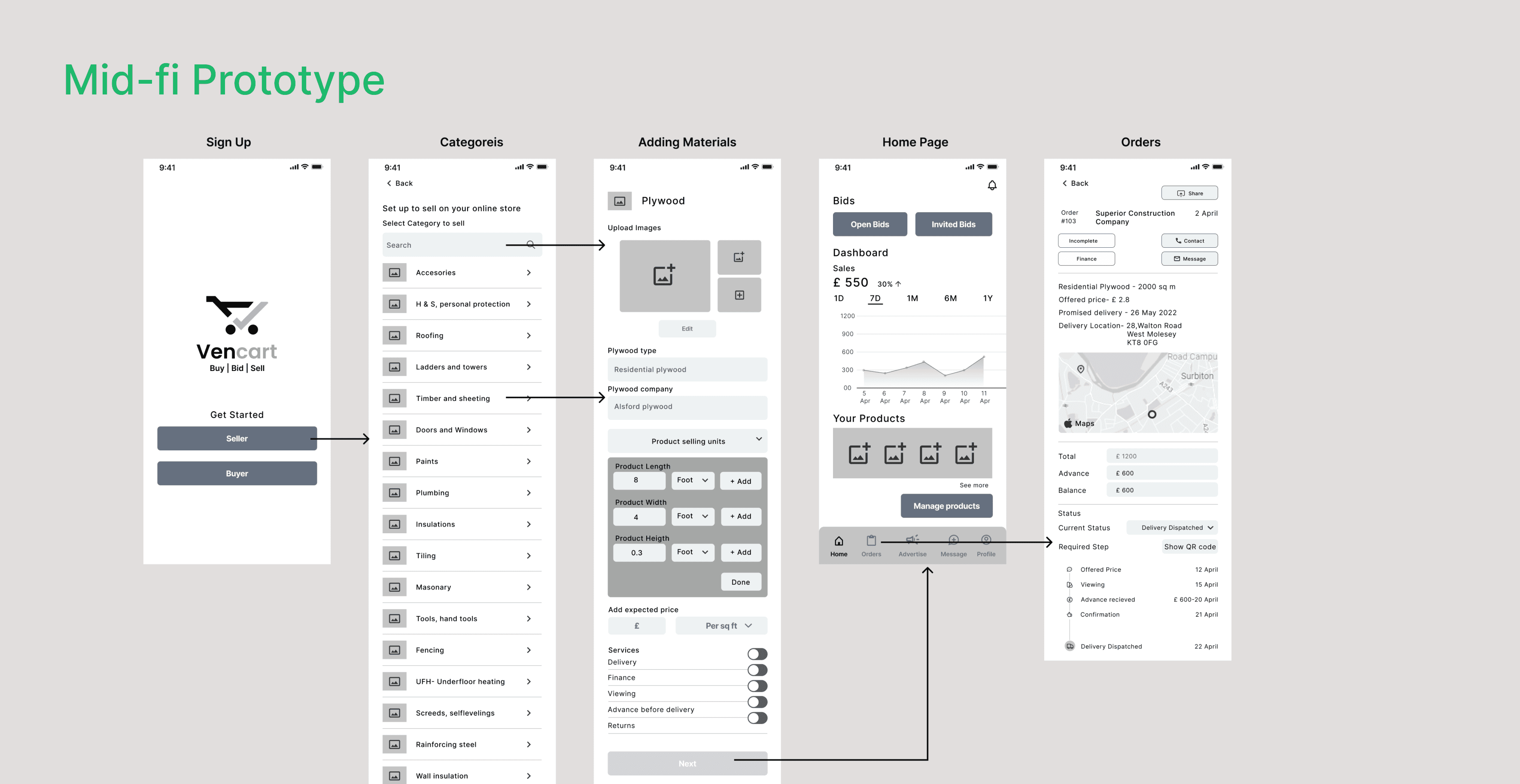
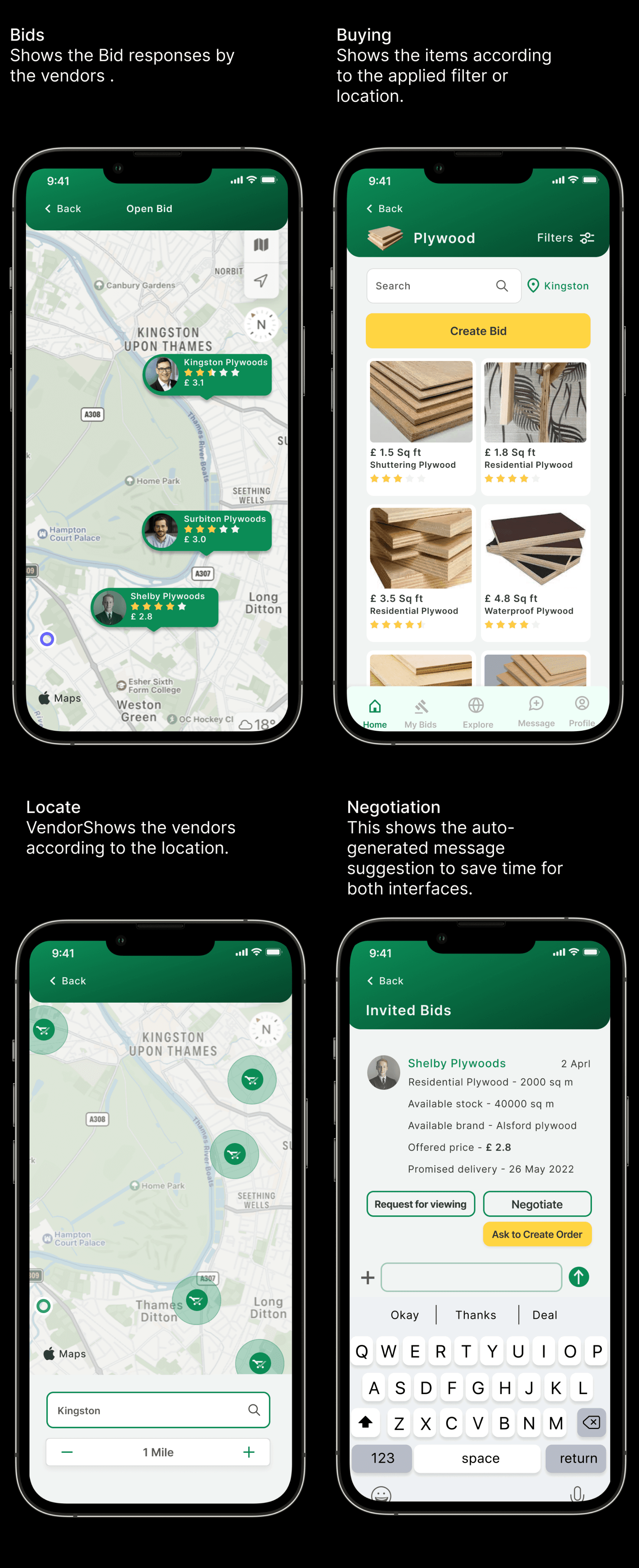
The basic site map was created before making the low fi screens to get the idea of how the user flow of the application should be. Considering interview insights, two interfaces were considered: one for the buyer and the other for the seller. The paper prototypes with the testing findings were transformed into a mid-fi prototype. This phase aids in visualizing the right content and placement of the visual design, as well as the procedures necessary to achieve the desired outcomes. Figma was used to create Mid fi Prototype.
17.0Prototype
The basic site map was created before making the low fi screens to get the idea of how the user flow of the application should be. Considering interview insights, two interfaces were considered: one for the buyer and the other for the seller. The paper prototypes with the testing findings were transformed into a mid-fi prototype. This phase aids in visualizing the right content and placement of the visual design, as well as the procedures necessary to achieve the desired outcomes. Figma was used to create Mid fi Prototype.
17.0Prototype
The basic site map was created before making the low fi screens to get the idea of how the user flow of the application should be. Considering interview insights, two interfaces were considered: one for the buyer and the other for the seller. The paper prototypes with the testing findings were transformed into a mid-fi prototype. This phase aids in visualizing the right content and placement of the visual design, as well as the procedures necessary to achieve the desired outcomes. Figma was used to create Mid fi Prototype.
18.0Final Screens
18.0Final Screens
18.0Seller Interface
18.0Seller Interface
18.0Buyer Interface
18.0Buyer Interface
19.0Testing
The application's complexity necessitated the usage of both a 5-act interview approach and a valence test methodology. The participants were given tasks to do on the app. The participants were told to think aloud and proclaim green if everything appeared to be in order and red if something appeared to be missing while doing the task. The participants' flow as well as their recommendations were recorded.
Key Findings
⦁ 3 out of 4 found the application easy.
⦁ 2 out of 4 had problems while adding the item to sell.
⦁ 1 out of 4 was not able to proceed and was confused by the buttons before payment.
⦁ 2 out of 4 got confused while choosing the subscription plan due to the interface.
⦁ 2 out of 4 struggled to find the sales button on Home Page.
⦁ 1 out of 4 was confused between the text colour in the My Orders section.
19.0Testing
The application's complexity necessitated the usage of both a 5-act interview approach and a valence test methodology. The participants were given tasks to do on the app. The participants were told to think aloud and proclaim green if everything appeared to be in order and red if something appeared to be missing while doing the task. The participants' flow as well as their recommendations were recorded.
Key Findings
⦁ 3 out of 4 found the application easy.
⦁ 2 out of 4 had problems while adding the item to sell.
⦁ 1 out of 4 was not able to proceed and was confused by the buttons before payment.
⦁ 2 out of 4 got confused while choosing the subscription plan due to the interface.
⦁ 2 out of 4 struggled to find the sales button on Home Page.
⦁ 1 out of 4 was confused between the text colour in the My Orders section.
20.0Discussion
Strength
Benefits of Vencart application-
⦁ An e-marketplace allows for more efficient procurement and easier access to building material data.
⦁ Companies may find it advantageous to use a negotiation and bidding platform to complete the project within their budgetary constraints.
⦁ Finance options for the construction companies can be one of the reasons for Vencart success.
⦁ Vendors may post advertisements and Buyers can contact them directly through the platform.
Future Work
This marketplace has a lot of potential since the construction industry is turning digital. Artificial intelligence, augmented reality, and virtual reality may all be used to improve the user experience. Additional qualitative data from more key users can give the application more room for improvement.More user testing with stakeholders may help optimise categories, eliminate unnecessary features, and speed up the process of buying, selling, advertising, and negotiating.
15.0Final Screens
Seller Interface
20.0Review and Implementation
Strength
Benefits of Vencart application-
⦁ An e-marketplace allows for more efficient procurement and easier access to building material data.
⦁ Companies may find it advantageous to use a negotiation and bidding platform to complete the project within their budgetary constraints.
⦁ Finance options for the construction companies can be one of the reasons for Vencart success.
⦁ Vendors may post advertisements and Buyers can contact them directly through the platform.
Future Work
This marketplace has a lot of potential since the construction industry is turning digital. Artificial intelligence, augmented reality, and virtual reality may all be used to improve the user experience. Additional qualitative data from more key users can give the application more room for improvement.More user testing with stakeholders may help optimise categories, eliminate unnecessary features, and speed up the process of buying, selling, advertising, and negotiating.
Buyer Interface
19.0Testing
The application's complexity necessitated the usage of both a 5-act interview approach and a valence test methodology. The participants were given tasks to do on the app. The participants were told to think aloud and proclaim green if everything appeared to be in order and red if something appeared to be missing while doing the task. The participants' flow as well as their recommendations were recorded.
Key Findings
⦁ 3 out of 4 found the application easy.
⦁ 2 out of 4 had problems while adding the item to sell.
⦁ 1 out of 4 was not able to proceed and was confused by the buttons before payment.
⦁ 2 out of 4 got confused while choosing the subscription plan due to the interface.
⦁ 2 out of 4 struggled to find the sales button on Home Page.
⦁ 1 out of 4 was confused between the text colour in the My Orders section.
20.0Discussion
Strength
Benefits of Vencart application-
⦁ An e-marketplace allows for more efficient procurement and easier access to building material data.
⦁ Companies may find it advantageous to use a negotiation and bidding platform to complete the project within their budgetary constraints.
⦁ Finance options for the construction companies can be one of the reasons for Vencart success.
⦁ Vendors may post advertisements and Buyers can contact them directly through the platform.
Future Work
This marketplace has a lot of potential since the construction industry is turning digital. Artificial intelligence, augmented reality, and virtual reality may all be used to improve the user experience. Additional qualitative data from more key users can give the application more room for improvement.More user testing with stakeholders may help optimise categories, eliminate unnecessary features, and speed up the process of buying, selling, advertising, and negotiating.
More Projects
More Projects
More Projects
Map it
Map it
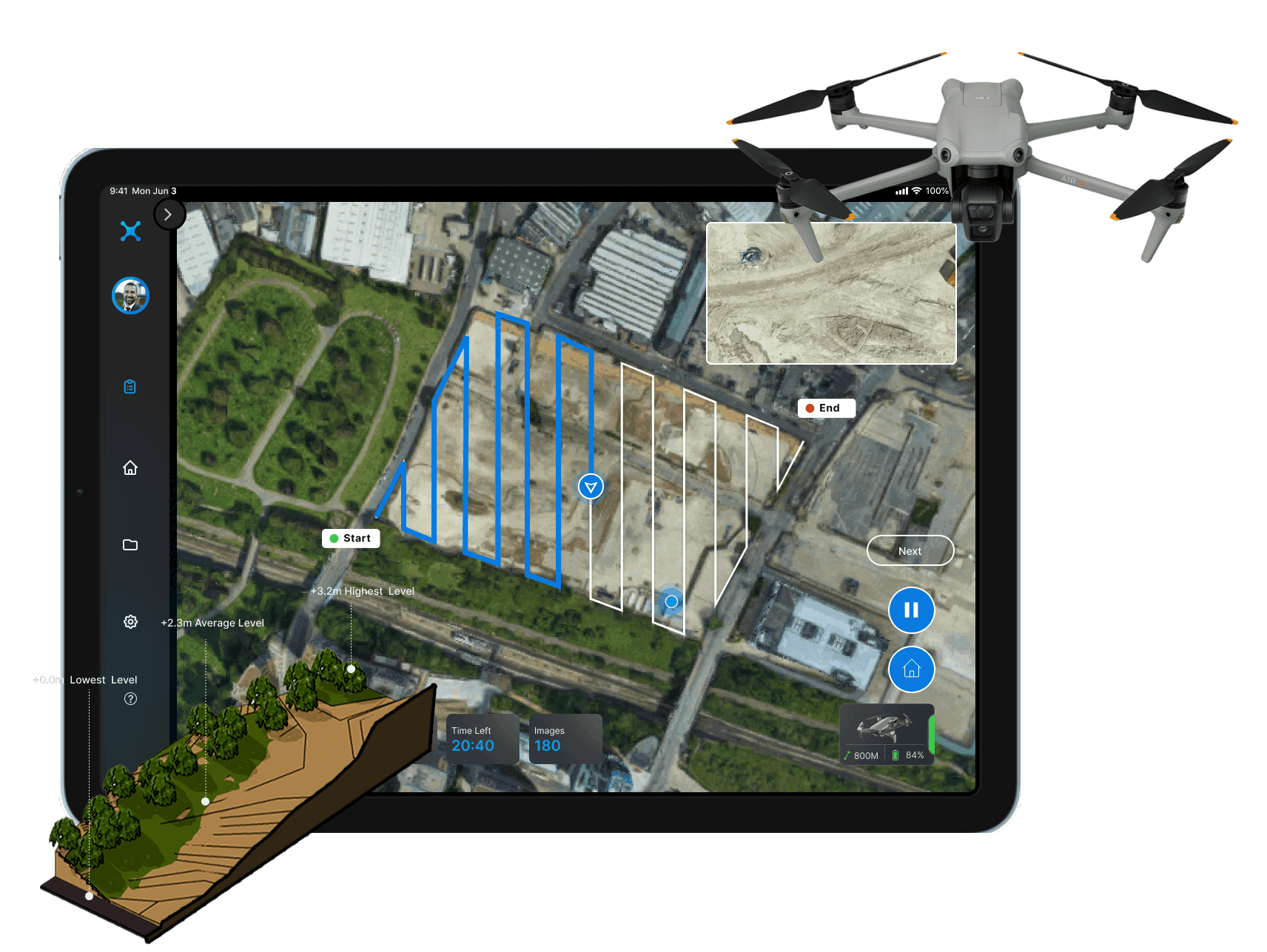
A global site surveying and observing platform for construction sector organizations worldwide to examine building sites for project milestones and supervise them from a distance.